#DevOps
-
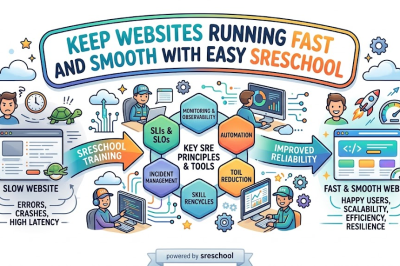
Save Big Websites From Nasty Crashes Using sreschool-com
Introduction Picture this fun scene in your head right now. You sit down with a big bowl of crunchy popcorn to enjoy your favorite video game. Then, the computer screen freezes completely. A scary red error message blocks your screen, and your fun stops instantly. We all hate that bad feeling when apps break down.…
-
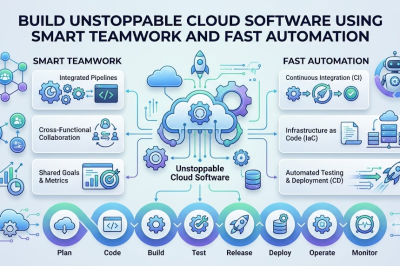
How Clever Tech Friends Help Computer Systems Run Super Fast
Introduction Playing games on your tablet brings tons of joy every single afternoon. Behind that glass screen, large server boxes talk to each other without stopping. Sometimes heavy traffic rushes in and threatens to stop your playtime. Yet, friendly computer crews spot the trouble early and keep your screen bright. Curious students can discover how…
-
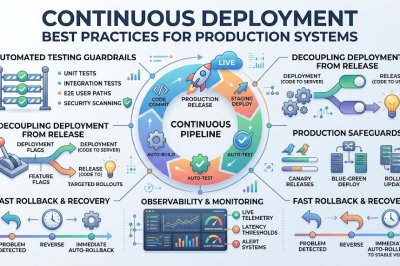
Continuous Deployment Best Practices for Production Systems
Continuous deployment (CD) automatically sends every code change that passes automated testing straight to live production environments. While continuous delivery requires human approval to launch, continuous deployment eliminates manual gates entirely to accelerate release cycles. When managing live systems, engineering teams must implement strict architectural guardrails to release software quickly without introducing downtime or customer…
-
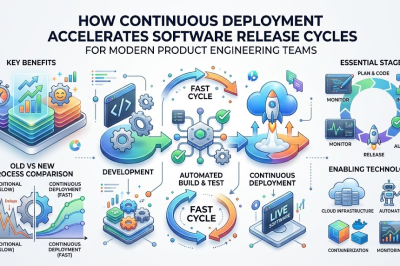
How Continuous Deployment Accelerates Software Release Cycles For Modern Product Engineering Teams
Imagine you build a giant Lego castle. If you wait months to put all the blocks together at once, pieces might not fit. You will spend days searching for missing bricks and fixing cracks. Instead, imagine having a smart robot friend that checks every brick the moment you snap it in. If the brick fits,…
-
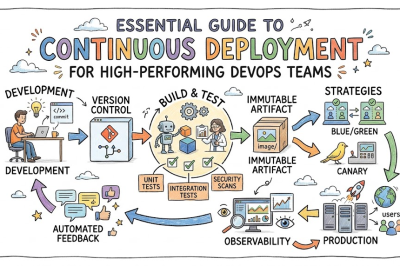
Essential Guide to Continuous Deployment for High-Performing DevOps Teams
Modern software organizations face non-stop pressure to roll out features rapidly while keeping their systems reliable and secure. Consequently, manual release cycles often cause friction between developers who want to ship code and operations teams who demand absolute stability. Continuous deployment directly resolves this friction by automating the journey of code from a developer’s machine…
-
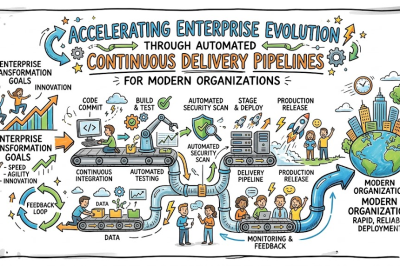
Accelerating Enterprise Evolution Through Automated Continuous Delivery Pipelines For Modern Organizations
Modern enterprises pursue digital transformation to remain adaptable, enhance client experiences, and outpace market competitors. However, adopting cloud platforms or modernizing user interfaces achieves very little if software releases remain trapped in slow manual release cycles. Continuous Delivery resolves this operational bottleneck by automating the entire pathway from code commit to production-ready software. Through automated…
-
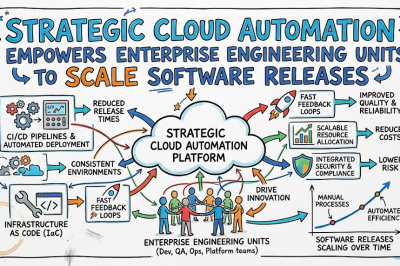
Accelerating High Velocity Software Delivery Through Enterprise Cloud Automation
Foundational Overview Rapid feature delivery requires engineering leaders to balance release velocity with dependable infrastructure uptime. Therefore, forward-thinking organizations break down old communication walls to merge development agility directly with operational discipline. Modern enterprise systems require uninterrupted availability, immediate rollback safety nets, and clear visibility across multi-cloud environments. Consequently, innovative companies team up with seasoned…
-
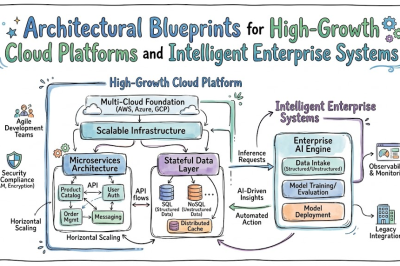
Architectural Blueprints for High-Growth Cloud Platforms and Intelligent Enterprise Systems
Practical Engineering Foundation Enterprises routinely encounter severe delivery roadblocks when attempting to merge aggressive product ambitions with unyielding system reliability. Consequently, visionary technology leaders continually seek dependable methods to align rapid software releases with operational resilience. Creating a direct bridge between strategic business aims and daily engineering workflows resolves these chronic delivery bottlenecks. Therefore, cross-functional…
-
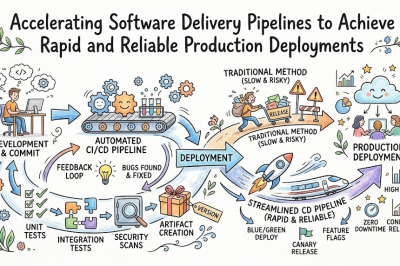
Accelerating Software Delivery Pipelines to Achieve Rapid and Reliable Production Deployments
Modern engineering organizations face relentless pressure to deliver new software capabilities quickly without compromising system stability. Consequently, traditional manual deployment workflows create massive friction, introducing human errors and unacceptably long release cycles. Continuous Delivery (CD) solves this challenge directly by automating the entire release path from code validation to production rollout. By creating standardized, repeatable…
-
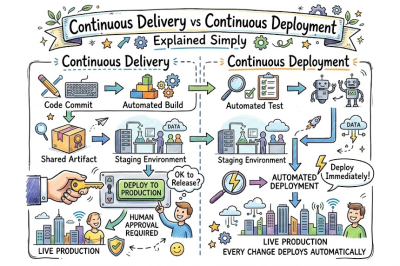
Continuous Delivery vs Continuous Deployment Explained Simply
Navigating modern release strategies often creates confusion around continuous delivery and continuous deployment. While both methodologies automate the path from code check-in to functional environments, their final trigger mechanisms differ significantly. Continuous delivery ensures that every validated change stays permanently ready for production, but human approval decides the exact moment of rollout. On the other…
-
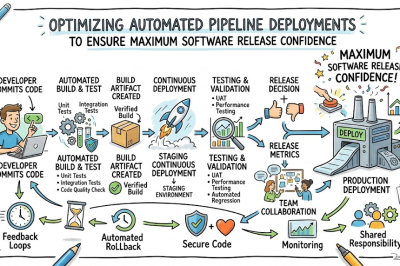
Optimizing Automated Pipeline Deployments To Ensure Maximum Software Release Confidence
Modern software engineering teams constantly strive to deliver high-quality code updates to production environments without disrupting existing user experiences. However, manual deployment steps and irregular release schedules often lead to deployment anxiety, unverified bugs, and unexpected system downtime. Continuous delivery directly solves these operational bottlenecks by automating the entire release mechanism from code check-in to…
-
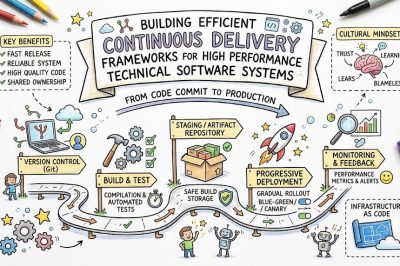
Building Efficient Continuous Delivery Frameworks For High Performance Technical Software Systems
Modern enterprise software teams must release high-quality features continuously while maintaining system stability and security. Consequently, traditional manual deployment workflows create operational friction, increase production downtime, and delay valuable features from reaching users. Establishing a structured continuous delivery framework solves these engineering challenges by automating the entire release pipeline from code verification to production deployment.…
-
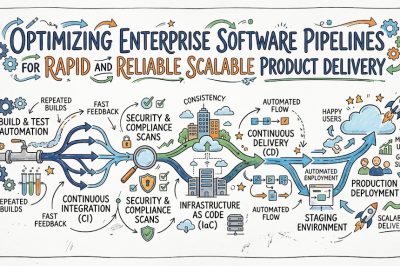
Optimizing Enterprise Software Pipelines for Rapid and Reliable Scalable Product Delivery
Enterprise engineering teams constantly face the intense pressure of shipping complex software systems quickly while preserving rigid security and compliance standards. Consequently, traditional deployment strategies often result in painful release delays, manual handoffs, and unexpected production outages. Continuous delivery resolves these organizational bottlenecks by automating the end-to-end pathway from code validation to deployment environments. By…
-
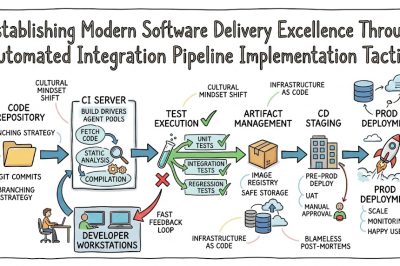
Establishing Modern Software Delivery Excellence Through Automated Integration Pipeline Implementation Tactics
Continuous integration forms the indispensable cornerstone of any successful enterprise DevOps transformation. When development teams attempt to accelerate delivery without an automated integration framework, they inevitably encounter severe code conflicts and fragile deployment cycles. Consequently, continuous integration bridges the traditional divide between development and operational workflows by enforcing real-time code validation. By encouraging developers to…
-
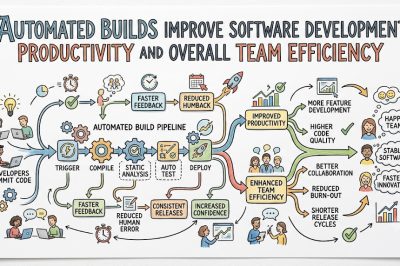
Automated Builds Improve Software Development Productivity And Overall Team Efficiency
Modern software development teams face constant pressure to ship high-quality features rapidly while maintaining bulletproof codebase stability. Consequently, relying on manual compilation processes creates massive operational bottlenecks, frequent human errors, and unpredictable deployment schedules across engineering departments. Automated builds solve this critical challenge by transforming manual compilation, dependency fetching, and initial sanity checks into a…
-
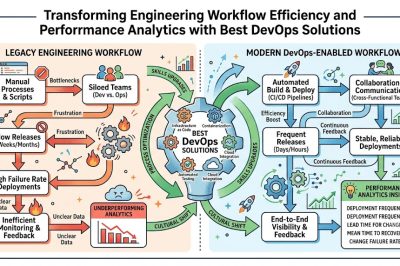
Transforming Engineering Workflow Efficiency and Performance Analytics with Best DevOps Solutions
Introduction Elevating software delivery metrics requires a radical shift in how teams approach continuous integration and infrastructure scalability. Many development shops find themselves bogged down by brittle code deployments and manual environment provisioning. This friction delays feature rollouts, dampens team morale, and directly impacts business revenue negatively. Supercharging operational efficiency depends entirely on adopting the…
-
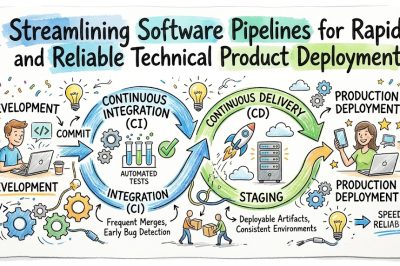
Streamlining Software Pipelines for Rapid and Reliable Technical Product Deployment
Modern development teams face intense pressure to ship software faster while maintaining flawless code quality. Consequently, traditional development methods often lead to messy integration delays and hidden bugs that derail timelines. Continuous Integration addresses this exact bottleneck by automating how developers merge and test their code continuously. By integrating code changes frequently into a shared…
-
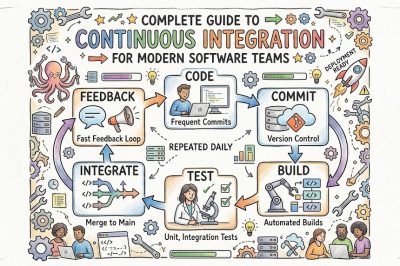
Complete Guide to Continuous Integration for Modern Software Teams
Software teams move faster than ever, yet speed alone does not create reliable software. Teams also need a way to merge code often, test changes early, and catch issues before they spread across the product. That is where continuous integration becomes essential. Continuous integration, often called CI, is the practice of regularly merging code changes…
-
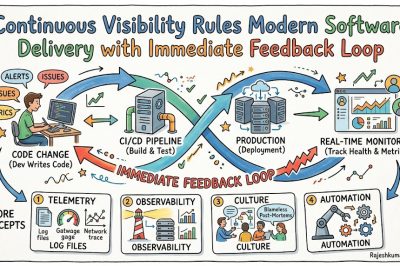
Continuous Visibility Rules Modern Software Delivery with Immediate Feedback Loop
In the fast-paced realm of modern software development, teams often deploy code multiple times a day. Consequently, developers must understand how their changes behave in production immediately after deployment. A professional mentor like Rajeshkumar always emphasizes that waiting hours or days to discover an issue drastically increases remediation costs. Immediate feedback and continuous monitoring serve…
-
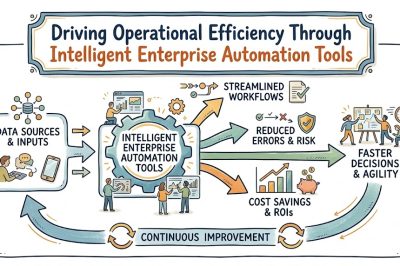
Driving Operational Efficiency Through Intelligent Enterprise Automation Tools
Introduction Modern infrastructure teams face massive volumes of telemetry data every second, which introduces unprecedented architectural complexity. Systems administrators frequently battle severe alert fatigue while attempting to isolate infrastructure faults manually. Traditional monitoring platforms simply lack the capacity to synthesize multi-cloud data streams effectively. Because of these challenges, forward-looking professionals actively choose AiOpsSchool to build…

Follow Us
Recent Posts
Categories
- Apache Solr 7
- mongodb 5
- Top Tools 985
- Uncategorized 405
Tags
#AIOps #Automation #AutomationTesting #CareerGrowth #CICD #CI_CD #CloudComputing #CloudEngineering #CloudNative #CloudSecurity #ContinuousDelivery #ContinuousIntegration #DataOps #DevOps #DevOpsCareer #DevOpsCertification #DevOpsCulture #DevOpsSchool #DevSecOps #DigitalTransformation #InfrastructureAsCode #Kubernetes #MLOps #OperationsEngineering #PlatformEngineering #SiteReliabilityEngineering #SoftwareDelivery #SoftwareEngineering #SRE #TechCertification