Introduction
Shipping software involves much more than merging code. Every release includes development work, reviews, builds, packages, deployments, and business decisions. Teams need to connect these activities before they can fully understand what reached production.
The problem is that release information often sits in separate systems. Developers check source control, project managers review tasks, and operations teams monitor deployment pipelines. Finding the complete story can take time.
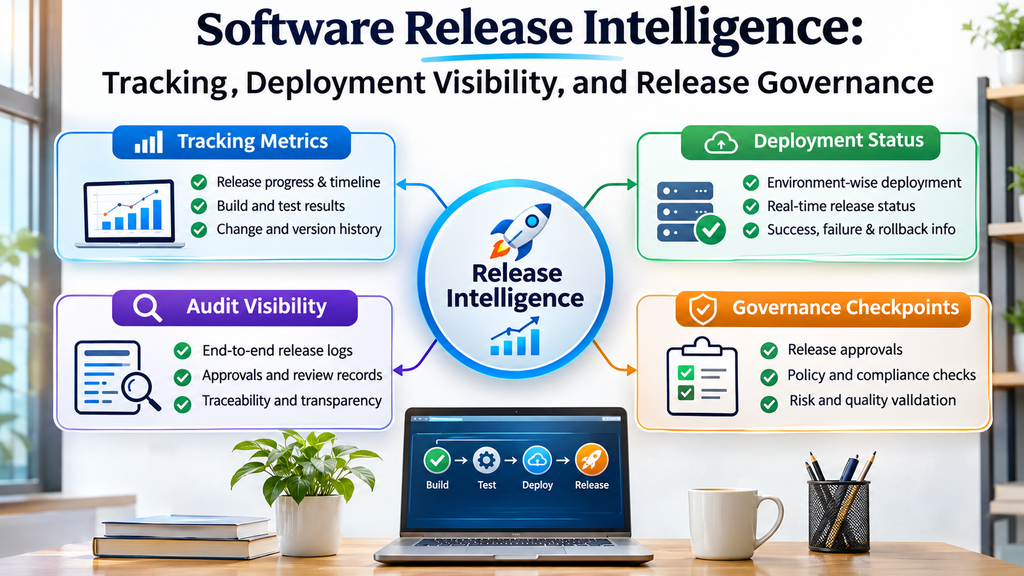
A connected release management process brings these records together. It helps teams understand changes, verify delivery evidence, manage approvals, and prepare accurate reports. This guide explores ten important capabilities that support better software releases and explains where Reloqui can help.
Why Release Information Becomes Difficult to Manage
Consider a company that maintains several applications. Each application has its own development team, delivery process, and deployment schedule.
One team may use GitHub for source control. Another may manage tasks in Jira. CI/CD pipelines may create builds, while artifact registries store packages. Infrastructure teams may also use tools such as Terraform.
Each system provides useful information. The difficulty comes when someone needs to connect it all.
A release manager may need to confirm the changes included in a version. An SRE may need to identify the deployment that introduced a problem. A compliance professional may need to review approval history.
Manual checks across several systems can create delays and gaps. A connected release process gives teams a shared view of the evidence.
1. Software Release Tracking Tool
A software release tracking tool helps teams monitor the journey of a software version. It connects development activity with build information, release packages, and deployment records.
The main benefit is visibility. Teams can understand what belongs to a release instead of relying on separate status updates.
What should teams track?
A useful release record should include:
- Version details: The application name, version, and release scope.
- Development changes: Commits, tags, and pull requests.
- Work items: Bugs, features, and related tasks.
- Build results: Pipeline runs and relevant test results.
- Artifacts: Packages or container images created for delivery.
- Deployments: Environments where the software was released.
- Exceptions: Missing links, failed checks, or unclear records.
A practical release tracking example
Imagine a team preparing version 4.2 of an inventory application. The update includes a new search feature and two bug fixes.
The team should connect the related development tasks with the code changes. It should then identify the build and artifact used for delivery. Finally, it should review the deployment record.
This creates a useful history for future reviews.
Reloqui brings engineering evidence together from source control, issue tracking, CI/CD, artifact registries, deployment environments, and infrastructure systems. It focuses on giving teams a clearer record of each software release.
When choosing a tracking solution, ask whether it can connect the full delivery path. Simply displaying release names is not enough.
2. Release Intelligence Platform
A release intelligence platform helps teams interpret the information behind a release. It connects records from different systems and highlights whether the available evidence supports the release.
This is different from checking whether a pipeline passed. A successful pipeline may not confirm that every expected change, artifact, or deployment record is connected.
How release intelligence adds context
A practical platform should help teams:
- Collect data from their engineering systems.
- Identify which records belong to each software version.
- Connect issues with pull requests and builds.
- Check artifact and deployment information.
- Find missing or conflicting evidence.
- Explain the release assessment.
Understanding release confidence
Reloqui uses an 11-stage release reconciliation engine. It collects and classifies engineering evidence. It then associates pull requests, issues, builds, artifacts, and deployments with a software version.
The platform calculates an explainable release confidence score. It considers signals such as Git tags, linked pull requests, successful builds, artifact availability, deployment evidence, orphaned changes, and force-push activity.
This helps teams understand why a release record appears complete or uncertain.
A useful intelligence platform should show supporting evidence. It should also make gaps visible so engineers can investigate them before making important decisions.
3. Software Release Audit Trail
A software release audit trail preserves the technical records and decisions connected to a software release. It helps teams explain what happened during delivery and review it later.
This matters when organizations need to investigate an incident, review an approval, or prepare compliance documentation.
What information should the record contain?
A release audit trail may include:
- Software name and version.
- Changes included in the release.
- Related pull requests and work items.
- Build and artifact records.
- Deployment information.
- Approval decisions.
- Exceptions and their supporting evidence.
How to maintain a reliable audit trail
First, identify the release. Record the version and its planned scope.
Next, connect development activity. Link the relevant changes and issues.
Then, add delivery evidence. Include build results, artifact details, and deployment records.
After that, record decisions. Preserve approval history and important exceptions.
Finally, keep the release snapshot. Make the evidence available for future reviews.
Practical situation
Suppose an application starts showing errors after deployment. Engineers need to identify what changed in that release.
A complete audit trail gives them a starting point. They can review the related changes, builds, artifacts, deployment details, and approval records.
Reloqui supports immutable release snapshots containing evidence and approval history. This helps teams maintain a consistent record of important release information.
4. Automated Release Notes Generator
An automated release notes generator helps teams prepare release documentation using information from development systems.
Writing release notes manually can become repetitive. Developers may forget small changes, and different teams may describe similar work in different ways.
Automation can collect and organize the information. People can then review the final document before publication.
A simple release notes process
- Collect merged pull requests and linked issues.
- Identify the changes related to the software version.
- Group updates into features, fixes, and maintenance work.
- Prepare summaries from the available records.
- Review the technical meaning and wording.
- Publish the approved release notes.
Why audience matters
A single release may require several types of communication.
- Engineering: Technical changes and implementation details.
- Operations: Deployment and service-related information.
- Product: Features and user-facing improvements.
- Executives: A concise release overview.
- Compliance: Relevant evidence and decision records.
Reloqui provides audience-specific release documentation for these groups using a common evidence base.
A good automated release notes process should save writing time without reducing accuracy. Reviewers should check important details before publishing the document.
5. Release Readiness Assessment Software
Release readiness assessment software helps teams decide whether a software version meets the conditions required for release.
A build can succeed while other important information remains incomplete. The team may still need to verify the artifact, linked changes, or deployment evidence.
Build a readiness checklist
Use the following checks as a starting point:
1. Confirm the release scope
Check whether the changes match the planned version.
2. Review code changes
Confirm that the expected pull requests and commits are included.
3. Verify work item links
Check whether the development changes connect with the correct issues.
4. Review build results
Confirm that the required pipeline completed successfully.
5. Check artifact availability
Identify the package or image created for the release.
6. Verify deployment evidence
Review the available records for the target environment.
7. Investigate exceptions
Understand missing or conflicting information before proceeding.
Example: An unclear release record
A team has completed its build, but cannot confirm which artifact belongs to the release. The team should investigate this gap before treating the delivery record as complete.
Reloqui calculates a release confidence score using several evidence signals. It presents exceptions and uncertainty with supporting information.
Each organization should define its own readiness rules. A high-risk service may require more checks than a small internal application. A confidence score can support the review, but engineering judgment remains important.
6. Release Approval Workflow Software
Release approval workflow software helps organizations control how releases move through review and approval.
Informal approval through chat messages can make later reviews difficult. Teams may not know who approved a release or which information supported that decision.
A defined workflow creates clear responsibilities.
How the approval process should work
Step 1: Prepare the release
Collect the version details and supporting evidence.
Step 2: Check release policies
Review the conditions required by the organization.
Step 3: Examine unresolved issues
Identify missing evidence, failed checks, and exceptions.
Step 4: Send the release for review
Assign the relevant reviewers or decision-makers.
Step 5: Record the outcome
Preserve approval or rejection details.
Step 6: Continue the release process
Proceed when the required conditions are met.
Governance controls to consider
Organizations may need:
- Confidence thresholds.
- Reviewer roles and approval rules.
- Publishing policies.
- Release freeze windows.
- Approval history.
A freeze window can help control changes during sensitive periods.
Reloqui supports confidence thresholds, approval workflows, publishing policies, and freeze windows. It also preserves approval history in immutable release snapshots.
Before introducing approval software, write down your release policy. Decide who reviews the release, what evidence they need, and how exceptions should be handled.
7. GitHub Jira Release Tracking
GitHub Jira release tracking connects development activity with project tasks and issue records.
GitHub commonly manages source code, commits, and pull requests. Jira commonly manages project tasks, bugs, and planned work.
When teams connect these systems, they can follow a change from its original request to its release.
How to connect GitHub and Jira
- Create a task or bug record in Jira.
- Begin development in the relevant GitHub repository.
- Link the pull request with its related issue.
- Review and merge the code change.
- Identify the release that includes the change.
- Connect the release with build and deployment evidence.
Example: A customer login improvement
A support team reports a login problem. The development team creates a Jira issue and starts a code fix.
A developer submits a pull request in GitHub. After review, the team merges it.
During release preparation, the team needs to confirm whether the fix belongs to the planned version. It should also be able to find the related build and deployment information.
Reloqui lists GitHub and Jira among its supported connector types. It also supports GitLab, Bitbucket, Azure DevOps, Linear, and other engineering integrations.
The quality of the connection also depends on good team practices. Consistent issue references and clear pull request descriptions make release tracking more useful.
8. CI/CD Deployment Tracking Dashboard
A CI/CD deployment tracking dashboard helps teams review build and deployment activity across their delivery process.
CI/CD automates parts of software integration and delivery. A pipeline may run tests, create a package, and deploy an application.
However, pipeline status does not always explain the complete release history.
Information worth tracking
A useful dashboard should help teams review:
- Build and pipeline status.
- Software versions.
- Artifact details.
- Deployment environments.
- Related development changes.
- Failed checks and missing records.
Example: One version, two environments
A team deploys an application update to staging. The deployment succeeds, and the team begins production release.
The production deployment then fails. Engineers need to know which version was involved and which artifact the pipeline attempted to deploy.
They also need to see the related changes and the final deployment status.
Reloqui connects CI/CD, artifact, deployment, and infrastructure evidence. This helps teams review delivery activity as part of the complete release record.
When comparing dashboards, look for more than charts and status indicators. The dashboard should help connect delivery results with the changes behind them.
9. Software Release Change Traceability
Software release change traceability means following a software change through its entire delivery journey.
It connects the original requirement or issue with the code change, build, artifact, and deployment. This relationship helps teams understand where a change came from and where it went.
A practical traceability method
Step 1: Identify the original request. Find the feature, bug, or requirement.
Step 2: Connect the code change. Locate its commit or pull request.
Step 3: Find the build. Identify the pipeline run that includes the change.
Step 4: Locate the artifact. Match the build with its package or image.
Step 5: Confirm deployment. Review evidence showing the target environment.
Step 6: Preserve the relationship. Keep these records connected with the software version.
Why this matters during incident reviews
Imagine a new release causes an issue in a customer-facing service. Engineers need to identify which changes entered the affected version.
Traceability helps them follow the release back to its development records. They can then compare versions and review the relevant evidence.
Reloqui offers a service catalog, dependency graphs, release comparisons, and impact analysis. These capabilities help teams understand relationships between applications, services, infrastructure resources, and deployment environments.
Traceability does not remove technical risk. It gives teams a clearer way to investigate changes and understand their possible impact.
10. Self-Hosted Release Management Software
Self-hosted release management software allows an organization to run its release platform on infrastructure it manages.
This model may suit teams that want control over their hosting environment. But it also requires people and processes to maintain the platform.
Evaluate these areas first
Infrastructure: Check the installation requirements and available resources.
Security: Review authentication, permissions, and data protection.
Maintenance: Assign responsibility for updates and system monitoring.
Backups: Define how the platform data will be protected.
Recovery: Prepare a plan for restoring the service after an outage.
Support: Review the available documentation and support options.
Choosing between self-hosted and managed
Self-hosting gives the organization responsibility for operating its environment. A managed option may reduce some infrastructure work, depending on its service agreement.
Reloqui advertises a free self-hosted platform with its complete feature set. It also offers a managed enterprise option with dedicated infrastructure, service-level commitments, operational support, backups, and disaster recovery.
Compare the options against your team’s skills, hosting requirements, and support needs. Remember that operating a self-hosted platform requires ongoing attention.
Bringing Release Management Activities Together
The ten capabilities become more valuable when they work as one process.
A practical release workflow can follow these stages:
Stage 1: Define the release
Select the software version, planned changes, and target environment. Make sure the development and operations teams agree on the scope.
Stage 2: Gather the records
Collect source control activity, issue details, build results, artifacts, and deployment information.
Stage 3: Connect the evidence
Match the records with the correct software version. Investigate missing links or unexpected changes.
Stage 4: Review readiness
Check the organization’s release requirements. Examine unresolved exceptions and decide what action is needed.
Stage 5: Complete approval
Send the release through the defined review process. Record decisions and relevant approval history.
Stage 6: Publish and preserve
Prepare the release documentation. Preserve the evidence so teams can use it during future reviews.
This approach helps reduce confusion between development, operations, product, and compliance teams. Everyone can work from a more consistent release record.
How to Evaluate a Release Intelligence Solution
A platform should fit the way your organization already builds and deploys software. It should solve real information gaps instead of adding unnecessary work.
Before selecting a solution, ask:
- Can it connect our source control and issue tracking systems?
- Can it associate changes with the right software version?
- Can it collect build, artifact, and deployment evidence?
- Can it identify missing or conflicting information?
- Can it explain how it assesses release confidence?
- Does it support our approval and publishing policies?
- Can it preserve evidence for future reviews?
- Does its hosting and support model meet our needs?
Reloqui is designed to complement existing engineering tools rather than replace them. Its connector options include source control, issue tracking, CI/CD, artifact registries, Terraform, and incident-related integrations.
Teams can explore its guided demonstration with synthetic release evidence. They can also review its technical documentation and REST API.
Visit the official website at https://reloqui.com/ to explore its approach to release tracking and intelligence.
A useful evaluation starts with a real release scenario. Check whether the platform can connect the records your team needs and explain any gaps clearly.
Frequently Asked Questions
1. What does a software release tracking tool help teams manage?
It helps teams connect software versions with code changes, tasks, builds, artifacts, and deployments. This creates a clearer release history and makes it easier to investigate missing information or unexpected changes.
2. How does a release intelligence platform support better decisions?
It connects engineering records and examines the evidence behind a release. Teams can review missing links, conflicting information, and release confidence signals before making delivery decisions.
3. Why should organizations maintain a software release audit trail?
An audit trail helps organizations review technical changes and release decisions. It can support incident investigations, compliance reviews, and internal assessments by preserving relevant evidence and approval history.
4. Can an automated release notes generator prepare documentation for different teams?
Yes, when the platform supports audience-specific summaries. Engineering, operations, product, and leadership teams often need different details. Reviewers should still check automated notes before publication.
5. What does release readiness assessment software evaluate?
It can help teams review release scope, code changes, linked issues, build results, artifacts, and deployment evidence. Organizations should define their own checks based on service risk and release policies.
6. How does release approval workflow software support governance?
It provides defined review steps and approval responsibilities. Teams can apply policies, record decisions, and handle exceptions. This creates a more consistent process and a useful history for later review.
7. What information does GitHub Jira release tracking connect?
It connects development work in GitHub with tasks and issues in Jira. Teams can follow a planned change through code review, merging, release preparation, and related delivery records.
8. What is the purpose of a CI/CD deployment tracking dashboard?
It helps teams review pipeline results, builds, artifacts, versions, and deployment environments. A useful dashboard also connects delivery activity with the changes included in a release.
9. How does software release change traceability help engineering teams?
It connects a requirement or issue with its code change, build, artifact, and deployment. Engineers can use these links to investigate incidents, compare releases, and understand the history of a change.
10. What should a team consider before adopting self-hosted release management software?
The team should review infrastructure, security, maintenance, access control, backups, recovery, and support. Self-hosting provides operational control but also creates ongoing responsibilities for the organization.
Final Thoughts
Software release management works best when teams can connect every important stage of delivery. They need to know which changes belong to a version, what evidence supports it, and where it was deployed.
Tracking, intelligence, audit trails, readiness checks, and approval workflows solve different parts of this challenge. Together, they help create a more transparent release process.
Start by reviewing your current tools and finding the information gaps. Then choose a solution that supports your workflow and operating needs. Reloqui is one platform worth exploring for connected release evidence and release governance.
SEO Details
SEO Meta Title: Software Release Tracking Tool for Modern DevOps Teams
Meta Description: Learn how release tracking, intelligence, audit trails, readiness checks, and approvals improve software delivery visibility and governance.