Setting the Operational Stage
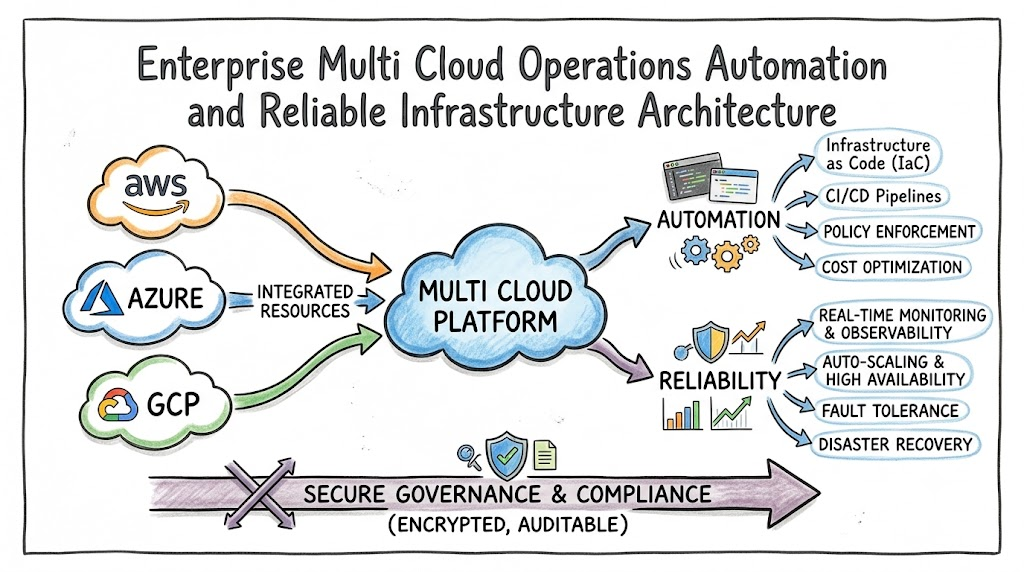
Modern digital enterprises depend on resilient cloud architectures to run business-critical software systems without interruption. However, managing distributed environments across different service providers creates operational bottlenecks, unpredictable hosting expenses, and complex compliance challenges. Technology leaders must balance continuous software releases with system stability and tight budget oversight.
CloudOpsNow functions as a dedicated knowledge hub that helps DevOps specialists, system administrators, and cloud architects conquer these infrastructure hurdles. Technology professionals discover practical workflows, automated deployment strategies, and governance standards to operate mission-critical workloads efficiently.
Core Mechanics of Cloud Operations
Cloud operations transforms how engineering teams manage computing resources across modern virtual networks. Rather than racking physical servers in traditional facilities, engineers control scalable computing power through declarative scripts and programmable application interfaces.
Furthermore, CloudOps unites continuous integration practices with dynamic infrastructure management. Platform teams constantly adjust computing capacity, optimize object storage, and apply network policies in real time to match user demand.
- On-Demand Provisioning: Teams deploy infrastructure assets in seconds using declarative configuration templates.
- Continuous Cost Efficiency: Administrators regularly audit compute utilization to terminate idle resources and lower spending.
- Proactive Security: Operations specialists embed compliance policies directly into deployment pipelines to stop security breaches.
Key Pillars of Cloud Operations Management
Structured cloud operations management establishes clear policies for provisioning, maintaining, and protecting digital assets across dynamic platforms. Without uniform operational oversight, teams experience configuration drift, security vulnerabilities, and unpredictable operational costs.
| Management Pillar | Primary Operational Target | Business Advantage |
|---|---|---|
| Security & Governance | Identity access management, role segregation, tagging standards | Eliminates unverified access and protects sensitive data assets |
| Financial Engineering (FinOps) | Resource rightsizing, compute reservation plans, budget tracking | Lowers monthly platform expenses by 20% to 35% |
| High Availability Architecture | Automated failovers, active data replication, disaster recovery drills | Guarantees business continuity during regional provider outages |
In our consulting experience with enterprise engineering divisions, implementing standardized operations frameworks reduces severe production downtime by nearly half. Consequently, platform engineers spend fewer hours managing unexpected crises and dedicate more energy to strategic software delivery.
Mastering Cloud Infrastructure Governance
Effective infrastructure governance focuses on orchestrating virtual machines, serverless endpoints, storage clusters, and software-defined networks. Unmonitored platforms accumulate abandoned resources rapidly, which inflates operating budgets and broadens external attack surfaces.
Furthermore, platform architects must enforce strict baseline configurations across every deployment stage. By applying uniform network controls and storage policies across all active subscriptions, engineering teams eliminate hidden environment discrepancies that trigger unexpected runtime errors.
- Maintain Live Asset Catalogs: Track every running compute node, load balancer, and storage container in real time.
- Standardize Resource Tagging: Require descriptive billing tags on every resource to attribute operational expenses accurately across business units.
- Execute Automated Cleanup Routines: Schedule background jobs that locate and terminate orphaned volumes and obsolete test environments.
Driving Efficiency Through Cloud Automation
Manual server updates inevitably create configuration inconsistencies, runtime failures, and prolonged deployment schedules. Conversely, automated workflows replace repetitive administration tasks with reliable scripts that deliver identical operational outcomes every single time.
Additionally, automation allows platforms to scale capacity instantly whenever consumer traffic surges. When sudden spikes hit digital services, automated scaling rules deploy supplementary computing nodes immediately without requiring manual intervention from engineering teams.
[Real-Time System Load Surge]
              │
              ▼
[Telemetry Triggers Dynamic Rule]
              │
              ▼
[Autoscaling Engine Activates]
              │
              ▼
[Spins Up Instances & Registers Health Checks]
              │
              ▼
[Distributes Traffic Evenly Across Fleet]
Code language: CSS (css)
Adopting self-healing workflows and auto-scaling rules establishes the core foundation of high-performing digital platforms.
Infrastructure as Code and Continuous Delivery Pipelines
Adopting cloud infrastructure automation enables engineering departments to manage hardware components through structured configuration files. Modern tools such as Terraform, OpenTofu, and Ansible eliminate manual web-console administration and accelerate deployment timelines.
Moreover, storing infrastructure configurations in version control systems enables collaborative peer reviews and reliable rollback mechanisms. If an engineering update disrupts a staging cluster, teams roll back the commit to restore normal operations within seconds.
- Terraform & OpenTofu: Provide multi-platform resource provisioning using a single unified configuration standard.
- Ansible & SaltStack: Standardize operating system updates and service configurations across large server fleets.
- Automated CI/CD Engines: Scan IaC templates for security misconfigurations before applying updates to production tiers.
Telemetry Evolution: From Basic Monitoring to Deep Observability
Basic monitoring platforms merely track whether an individual server responds to periodic health checks. In contrast, full observability unlocks deep visibility into why an entire distributed system encounters performance degradation.
Because distributed microservices interact across complex networks, modern platform teams monitor three foundational telemetry layers:
- Real-Time Metrics: Time-series records that measure CPU loads, memory limits, and network throughput across nodes.
- Structured Event Logs: Timestamped application data that captures functional exceptions, operational events, and access records.
- Distributed Request Tracing: End-to-end transaction journeys that highlight execution latency across individual service dependencies.
By consolidating these telemetry layers onto unified dashboards, reliability specialists identify and resolve root causes before issues disrupt customer workflows.
Operational Standards for AWS, Azure, and GCP Workloads
Enterprises frequently distribute mission-critical services across multiple hyperscalers to avoid vendor concentration and maximize operational flexibility. However, managing AWS Azure GCP cloud management demands deep familiarity with distinct identity models and administrative interfaces that teams must coordinate smoothly.
| Architectural Domain | Amazon Web Services (AWS) | Microsoft Azure | Google Cloud Platform (GCP) |
|---|---|---|---|
| Access Control | AWS IAM Roles & Policy Documents | Microsoft Entra ID Directories | GCP IAM Roles & Service Accounts |
| Compute Foundations | Elastic Compute Cloud (EC2) | Azure Virtual Machines | Google Compute Engine (GCE) |
| Primary Platform Strength | Extensive service maturity & ecosystem breadth | Native corporate Active Directory alignment | Advanced analytics platforms & native Kubernetes tools |
To maintain efficiency, operations specialists establish standard deployment scripts, universal logging pipelines, and unified alerting rules across every integrated cloud provider.
Strategic Multi Cloud Management
Deploying across multiple public cloud vendors enables enterprises to utilize specialized provider tools while improving negotiating leverage. However, multi cloud management introduces significant operational complexity if teams use fragmented administrative tooling.
To overcome these barriers, organizations implement unified management planes that aggregate cost analytics, compliance posture, and container orchestration across all active provider accounts.
       [Centralized Operations & Governance Engine]
                          │
       ┌──────────────────┼──────────────────┐
       ▼                  ▼                  ▼
 [AWS Environment]  [Azure Environment] [GCP Environment]
  (Core Database)     (Identity/Apps)     (Big Data/AI)
Consequently, platform engineers maintain comprehensive security baselines and unified policy enforcement without designing separate tools for each vendor.
Engineering High-Availability Cloud Frameworks
Building dependable cloud systems requires deliberate architecture planning, proactive resilience testing, and automated recovery mechanisms. Systems must survive component crashes, network splits, and regional outages without disrupting end-user workflows.
- Distribute Systems Across Zones: Deploy application containers and data stores across isolated physical availability zones.
- Configure Proactive Load Balancing: Ensure traffic balancers automatically route client requests away from degraded worker nodes.
- Establish Error Budgets: Align engineering and product teams on acceptable downtime limits to balance release velocity with platform stability.
Adopting these strategic operational standards protects mission-critical systems and supports long-term platform growth.
Accelerating Technical Growth with CloudOpsNow
Mastering modern cloud infrastructure requires battle-tested strategies, clear architectural examples, and continuous learning. CloudOpsNow publishes in-depth engineering breakdowns, architecture guides, and technical tutorials tailored for modern technology professionals.
Platform practitioners discover step-by-step guides for refining automation workflows, strengthening multi-cloud governance, and building end-to-end observability platforms. Explore comprehensive learning resources to elevate your team’s technical execution.
Common Inquiries Regarding CloudOpsNow
- Which technical subjects does CloudOpsNow emphasize?The platform delivers educational content focused on cloud architecture governance, automated deployment workflows, multi-cloud platforms, and system observability.
- Who benefits most from the educational materials on CloudOpsNow?Site reliability engineers, DevOps practitioners, cloud architects, system administrators, and IT executives gain practical insights from the platform’s resources.
- Which cloud ecosystems receive coverage across CloudOpsNow?The platform provides detailed operational guides for major cloud providers, including Amazon Web Services, Microsoft Azure, and Google Cloud Platform.
- Does CloudOpsNow explain automated infrastructure frameworks?Yes, the platform offers actionable tutorials and best practices covering tools like Terraform, OpenTofu, and Ansible.
- Where can engineers find guidance on security baselines within CloudOpsNow?CloudOpsNow features detailed architectural breakdowns for implementing zero-trust identity architectures, role-based controls, and continuous policy enforcement.
- Can technical managers discover cloud cost optimization techniques on the site?Yes, the publication regularly shares FinOps frameworks and rightsizing workflows to help teams reduce monthly cloud spend.
- Which observability frameworks does CloudOpsNow discuss?The platform covers distributed tracing, metric collection pipelines, log centralization, and monitoring suites like Prometheus and Grafana.
- Does CloudOpsNow publish insights on container management and orchestration?Yes, practitioners find comprehensive articles detailing Kubernetes cluster management, container scaling patterns, and microservice networking.
- How regularly does CloudOpsNow update its technical resource library?The platform continually refreshes its article catalog with modern architecture blueprints, real-world case studies, and evolving industry standards.
- Do entry-level engineers find suitable tutorials on CloudOpsNow?Yes, the platform provides well-structured learning paths that guide engineers from foundational operational basics to advanced enterprise deployment strategies.
Moving Toward Infrastructure Excellence
Dynamic cloud environments offer exceptional technical flexibility, yet unlocking sustainable performance demands disciplined management, automated provisioning, and continuous observability. By adopting modern operations frameworks, engineering teams eliminate manual friction, reduce platform risks, and optimize infrastructure investments.
Studying the comprehensive architecture guides, automation workflows, and operational best practices on CloudOpsNow prepares platform teams to master complex infrastructure challenges and build resilient digital platforms that drive ongoing organizational innovation.



Leave a Reply
You must be logged in to post a comment.