Strategic Pathway To Optimal Oncology Care
Receiving an unexpected health update pushes individuals and families to take immediate, structured action. Identifying a reputable clinical facility establishes the cornerstone of an effective recovery path. Many people struggle to process complex medical jargon and divergent treatment recommendations. Therefore, gaining swift access to clear, validated medical facts across international healthcare hubs gives patients full command over their decisions.
Dedicated global directories simplify this vital discovery stage for families everywhere. By organizing verifiable details on clinical certifications, advanced therapeutic technologies, and seasoned specialists, these resources eliminate ambiguity. Patients quickly gain the practical knowledge required to choose optimal clinical pathways. This comprehensive guide outlines the exact benchmarks you need to identify premier oncology facilities across the globe.
What Should You Look for in Cancer Hospitals?
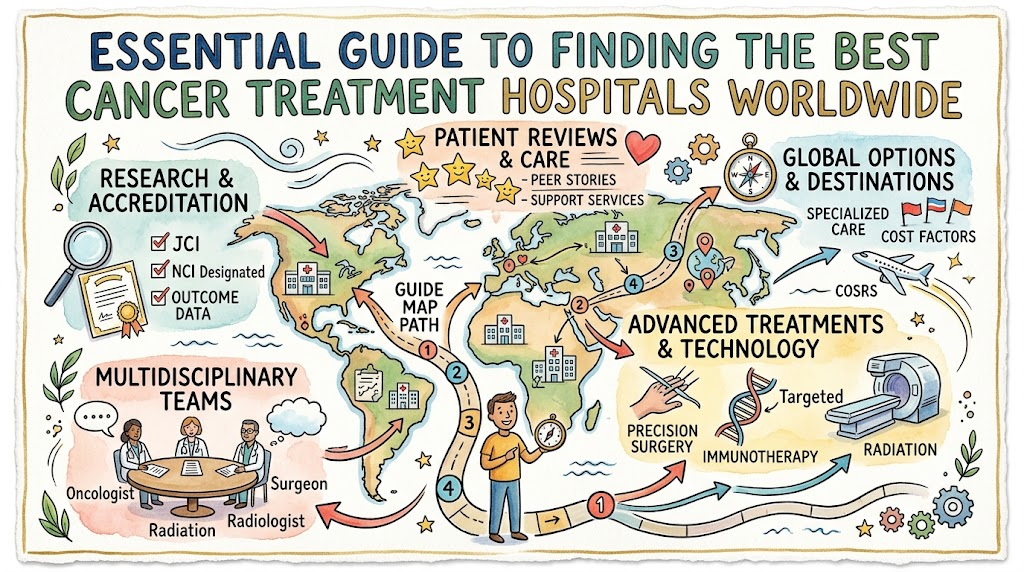
Selecting top-tier cancer hospitals requires an objective examination of clinical volume, international accreditations, and modern diagnostic systems. Elite healthcare centers hold distinguished credentials from recognized agencies such as the Joint Commission International. Furthermore, top institutions maintain active tumor boards where medical oncologists, surgical specialists, radiologists, and pathologists collaboratively formulate integrated patient care strategies.
- Collaborative Tumor Boards: Multidisciplinary medical teams review complex diagnostic profiles collectively to pinpoint optimal treatment sequences.
- Global Safety Certifications: Rigorous international accreditations verify that medical centers uphold strict patient safety protocols.
- Modern Surgical Equipment: Robotic surgical platforms and advanced linear accelerators maximize procedural accuracy and minimize recovery time.
- Attentive Nursing Teams: Favorable nurse-to-patient ratios ensure vigilant bedside care and prompt crisis intervention.
Published surgical data reveals that centers managing high procedural volumes achieve significantly lower complication rates and higher long-term survival statistics. Consequently, choosing an institution with proven mastery in your specific diagnosis enhances your recovery prospects substantially.
Understanding Cancer Treatment Options
Modern oncology employs precision therapies designed around individual genetic and molecular markers. Because clinical science advances rapidly, leading cancer treatment hospitals utilize innovative therapies that attack malignant cells directly. Understanding these clinical choices empowers you to participate actively in conversations with your medical team.
| Oncology Modality | Core Operational Mechanism | Primary Diagnostic Focus |
|---|---|---|
| Systemic Chemotherapy | Potent pharmacological agents destroying rapidly dividing malignant cells | Systemic, advanced, or metastatic conditions |
| Targeted Radiation | Focused high-energy radiation beams destroying localized tumors | Solid localized tumors and non-invasive pain management |
| Precision Targeted Therapy | Small molecules blocking specific genetic mutation pathways | Malignancies with verified biological markers |
| Advanced Immunotherapy | Biological agents stimulating the body’s natural immune defenses | Advanced skin, lung, and renal carcinomas |
| Robotic Resection Surgery | Articulated robotic arms executing tissue-preserving operations | Colorectal, urological, and gynecological cancers |
In addition, major oncology hospitals conduct clinical trials that provide early access to breakthrough medications. Consequently, exploring these emerging options creates valuable therapeutic pathways for complex conditions.
How to Compare the Best Cancer Treatment Hospitals
Ranking the best cancer treatment hospitals demands an evidence-based assessment rather than reliance on institutional marketing claims. You must evaluate five-year survival metrics, readmission rates, and specialized intensive care capabilities. Verify that the institution operates dedicated intensive care units directed by full-time oncological intensivists.
- Audited Survival Rates: Review documented outcome data for your specific cancer type and clinical stage.
- Comprehensive Supportive Services: Look for on-site genetic counselors, oncology nutritionists, and physical rehabilitation experts.
- Critical Care Facilities: Confirm continuous on-site intensive care infrastructure capable of managing acute oncological emergencies.
- Transparent Pricing Models: Request itemized financial projections covering surgeries, therapies, and potential extended stays.
Applying this analytical framework enables families to distinguish world-class medical centers from basic local clinics.
Researching the Best Cancer Doctors
Securing treatment from the best cancer doctors directly enhances procedural precision and clinical success. Because oncology subspecialization has advanced significantly, a clinician who focuses exclusively on your exact disease subtype provides sharper diagnostic accuracy than a general practitioner.
Moreover, examine physician board credentials, fellowship training, and published clinical research. Respected oncology leaders actively direct clinical trials and publish their findings in leading medical journals. Clear, transparent communication also matters immensely because strong patient-physician rapport reduces anxiety throughout treatment. Always seek an independent second opinion to validate your initial treatment plan with absolute certainty.
When Should You Consider Cancer Treatment Abroad?
Seeking cancer treatment abroad becomes a sensible alternative when domestic healthcare systems present strict limitations. For instance, advanced protocols like proton beam therapy, carbon-ion therapy, or specialized CAR-T cell infusions might lack regulatory clearance in your home region.
- Access to Breakthrough Therapies: Receive innovative pharmaceutical agents not yet cleared in domestic markets.
- Substantial Cost Savings: Global medical destinations often deliver identical procedures at 40% to 70% lower prices.
- Immediate Therapy Initiation: Eliminate waiting lists to start critical treatments without unnecessary delays.
- Renowned Global Specialists: Consult world-class medical authorities who routinely manage rare and complex malignancies.
Thus, traveling for international cancer treatment bridges the gap between limited domestic availability and premier global healthcare solutions.
Exploring Cancer Hospitals Around the World
Locating the best cancer hospitals in the world requires you to explore established international medical hubs. For example, prominent medical centers across North America and Western Europe lead the world in basic scientific research and ground-breaking clinical trials.
Simultaneously, leading medical destinations across Asia, including South Korea, India, and Turkey, deliver high-quality oncology care using modern technology at competitive rates. Consequently, international patients choose cross-border medical options based on therapy availability, total budget, logistical convenience, and specialized concierge care.
How CancersHospitals Can Help With Your Research
Reviewing numerous international facilities can easily feel overwhelming, but CancersHospitals clarifies your entire research process. By compiling comprehensive data on accredited hospitals, specialized oncologists, and advanced surgical procedures, the directory enables patients to make informed choices.
The platform allows families to examine clinical accreditations, compare treatment pathways, and evaluate global medical destinations on one structured site. Whether you seek the best hospital for cancer treatment nearby or need specialized surgery abroad, this resource supports your decision-making at every stage.
Questions to Ask Before Choosing a Hospital
Prepare practical clinical and administrative questions before confirming your hospital admission. Dedicated facilities address these inquiries openly and provide prompt answers.
- How many surgical procedures for my specific cancer type does your clinical team execute annually?
- Does a specialized multidisciplinary board review every case prior to commencing treatment?
- What specific intensive care facilities and emergency protocols manage sudden surgical complications?
- Will the administrative team supply an itemized written quote covering the complete treatment cycle?
- What dedicated services, including medical interpreters and visa guidance, do you provide for international travelers?
Documenting these precise details guarantees that your chosen facility matches your medical needs, safety expectations, and personal budget.
Frequently Asked Questions About CancersHospitals
- What tools does CancersHospitals provide to assist prospective patients?
The directory provides detailed informational resources and comparison tools covering international oncology centers, specialized clinicians, modern procedures, and global medical destinations.
- Which clinical indicators should patients evaluate when researching cancer hospitals?
Prioritize international clinical accreditations, audited five-year survival metrics, physician subspecialization, and the routine operation of multidisciplinary tumor boards.
- Does the directory offer direct medical diagnoses or personalized prescriptions?
The platform offers educational and research materials to support your discovery phase, which does not replace direct consultations with licensed healthcare professionals.
- Why do individuals travel across borders for oncology treatments?
Patients seek overseas medical care to obtain innovative pharmaceuticals, eliminate procedural wait times, decrease treatment expenses, and consult leading disease authorities.
- Where can families verify the background of an international cancer specialist?
Check official board certifications, subspecialty fellowship credentials, published medical research, clinical trial participation, and verified hospital appointments.
- What financial savings can patients achieve by seeking treatment overseas?
Accredited international hospitals routinely offer overall savings between 40% to 70% compared to private medical centers in North America or Western Europe.
- Which complex therapies most frequently motivate cross-border medical travel?
Patients travel abroad for proton beam therapy, robotic resections, CAR-T cell infusions, targeted biological medications, and complex organ-sparing surgical interventions.
- Why does an active multidisciplinary tumor board improve patient outcomes?
A tumor board brings together surgical, medical, and radiation oncologists who collectively build an integrated, personalized treatment strategy.
- Do international medical centers assist accompanying family members?
Leading global hospitals maintain international patient departments that coordinate family accommodations, language translation services, and local transit logistics.
- What documentation should patients prepare for an overseas clinical review?
Gather your pathology slides, digital diagnostic imaging scans, biopsy records, molecular profiling results, and previous physician treatment summaries.
Empowering Your Healthcare Journey
Taking active ownership of your medical decisions stands as your most vital step toward recovery. Take the necessary time to verify hospital accreditations, consult seasoned oncology specialists, and confirm your diagnosis through independent second opinions before starting intensive clinical regimens. Contemporary medical science advances continuously, delivering targeted solutions and improving long-term outcomes globally. Supported by structured research, clear questions, and transparent clinical directories, you can confidently navigate your path toward lasting health.



Leave a Reply
You must be logged in to post a comment.