Introduction
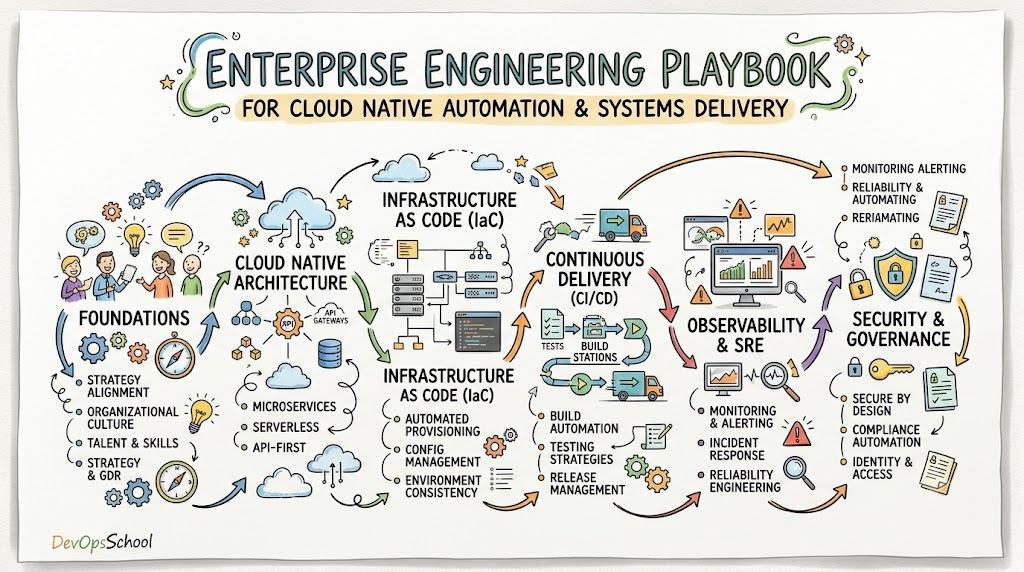
Enterprise software leaders constantly encounter crushing delivery bottlenecks when legacy organizational structures dictate engineering routines. Traditional companies regularly suffer crippling downtime when functional silos prevent real-time collaboration between developers and operational staff. Forward-looking businesses remove these structural obstacles by uniting infrastructure automation with shared operational responsibility.
Migrating toward unified platforms turns static operational departments into dynamic software delivery powerhouses. When technical squads automate routine configuration tasks, engineers direct their complete intellectual energy toward core product capabilities. Consequently, deep technical upskilling in platform architecture creates the primary driver for sustainable, resilient organizational growth.
Why Infrastructure as Code Matters
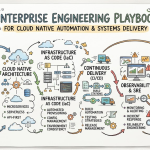
Manual system administration inevitably produces operational drift, security oversights, and unmanageable environment discrepancies across multi-tier setups. In contrast, modern operations professionals treat networks, virtual machines, and cloud storage as trackable, version-controlled code. By utilizing declarative provisioning tools, teams maintain complete, repeatable definitions of production platforms within collaborative repositories.
Engineers routinely provision, alter, and destroy identical cloud clusters within minutes through automated scripts. When unexpected hardware failures destroy live servers, automated code definitions recreate the identical topology without manual intervention. Ultimately, declarative infrastructure management provides strict audit trails, predictable system behavior, and ironclad operational reliability.
How CI/CD Improves Software Delivery
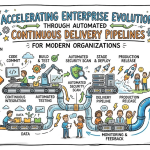
Automated integration pipelines completely reinvent how software squads ship customer value to staging and production targets. Instead of tolerating stressful manual deployments during late-night downtime windows, engineers trigger automated release pipelines with a simple code push. Consequently, automated platforms immediately run unit test suites, compile application artifacts, and enforce code quality standards.
These continuous delivery workflows supply software developers with instant feedback on each git commit. When a test suite fails, programmers diagnose and repair regressions right away while their contextual focus remains sharp. Therefore, modern development departments transform high-risk monthly release events into routine, predictable daily software deployments.
What Is DevOps and Why Does It Matter Today?
DevOps establishes an operational paradigm where software creation and platform administration merge into a unified workflow. Product teams eliminate historic departmental barriers and take complete ownership of features throughout their entire operational life. As customer expectations escalate, engineering units release reliable code updates rapidly rather than enduring grueling quarterly deployment cycles.
Automation eliminates human error and drastically decreases deployment overhead across production environments. Developers run tests, package artifacts, and verify system integrity through automated execution steps. Consequently, organizations achieve faster release iterations, preserve code quality, and maintain superior customer satisfaction.
Containers and Kubernetes in Modern Engineering
Container virtualization guarantees that business applications run reliably regardless of target host discrepancies. By bundling source files, operational dependencies, and system binaries together, engineers eradicate unpredictable environment-specific deployment bugs. However, operating extensive microservice fleets demands specialized cluster management and traffic orchestration.
Through intensive Kubernetes Training China, systems engineers conquer pod scheduling, automated cluster healing, and horizontal scaling strategies. Infrastructure teams deploy declarative workload controllers, configure ingress controllers, and enforce resilient storage policies across multi-node environments. These technical skills enable teams to manage complex distributed topologies with total operational control.
Core Components of a Modern DevOps Environment
Constructing a dependable software delivery ecosystem requires multiple integrated technical pillars operating in complete coordination. Distributed version control systems track configuration alterations and software source files with absolute precision. Concurrently, automated verification stages inspect each commit before workloads advance toward runtime targets.
Centralized telemetry solutions monitor cluster performance, network health, and system resource consumption across distributed architectures. By integrating declarative provisioning, container packaging, and trace analysis, organizations gain comprehensive visibility into their application stack. This deep observability enables platform engineers to resolve system degradation before disruptions impact daily end users.
Understanding Site Reliability Engineering
Site Reliability Engineering applies software engineering techniques directly to enterprise infrastructure operations. Instead of endlessly fighting production fires after major incidents occur, reliability teams track precise Service Level Indicators and manageable error budgets. Consequently, product owners strike a healthy balance between aggressive feature delivery and unyielding platform availability.
Pursuing specialized SRE Training China equips platform operators to eliminate tedious, manual operational toil systematically. Teams design robust telemetry platforms, automated disaster failover controllers, and blameless post-incident review mechanisms. Therefore, organizations prevent costly system outages while maintaining smooth end-user experiences during peak traffic demands.
Bringing Security Into the Development Lifecycle
Modern vulnerability landscapes force engineering departments to abandon outdated, end-of-cycle security checks. Postponing vulnerability assessments until the eve of deployment causes severe delivery roadblocks and exposes applications to critical threats. Proactive security architects embed defensive controls directly into standard continuous integration phases.
Through structured DevSecOps Training China, engineers integrate static application analysis, container image vulnerability scans, and automated secrets governance into their daily pipelines. Automated checks inspect pull requests continuously without manual gatekeeping. Teams build resilient, zero-trust platforms naturally while maintaining rapid feature rollout cadences.
Platform Engineering and Developer Experience
As modern cloud microservices proliferate, individual product developers experience immense cognitive fatigue from complex operations. Expecting software engineers to craft raw Kubernetes manifests, network security policies, and deployment scripts slows feature delivery considerably. Progressive engineering leadership solves this friction by establishing dedicated platform teams.
Attending targeted Platform Engineering Training China teaches infrastructure architects how to construct frictionless internal developer platforms. Systems specialists build self-service golden paths that safely automate runtime resource allocation. Thus, application developers release features autonomously without opening infrastructure support tickets or waiting for operational handoffs.
Cloud Computing and Modern Infrastructure
Cloud platforms furnish the flexible, on-demand compute infrastructure that modern businesses require to compete effectively. Instead of procuring physical servers and managing private data centers, teams spin up global infrastructure within seconds. Nonetheless, expanding multi-cloud architectures presents difficult operational challenges surrounding cost tracking, network isolation, and governance.
Completing comprehensive Cloud Computing Training China prepares systems architects to design resilient, cost-efficient multi-cloud systems. Engineers master elastic computing instances, managed databases, identity access policies, and automated software-defined networking. Consequently, enterprises maximize infrastructure efficiency while maintaining strict regulatory compliance across dynamic cloud operations.
The Rise of MLOps
Machine learning models deliver genuine business impact only when engineering teams deploy them reliably into live production environments. Migrating statistical models from experimental notebooks into high-performance web systems demands rigorous software delivery practices. Data teams must validate raw feature data, record experiment parameters, and monitor live prediction quality continuously.
Enrolling in specialized MLOps Training China trains engineers to automate machine learning pipelines and model lifecycle workflows. Specialists configure feature stores, orchestrate distributed model training jobs on Kubernetes, and spot runtime prediction drift quickly. As a result, data enterprises transition predictive artificial intelligence prototypes into durable revenue drivers.
Building an Effective DevOps Learning Roadmap
Navigating modern cloud infrastructure requires an intentional, step-by-step technical learning framework. Novice engineers frequently stumble by attempting to learn diverse open-source tools without understanding underlying systems design principles. Pragmatic practitioners prioritize foundational networking and operating system concepts before exploring advanced cluster orchestration.
Follow this sequential strategy to build durable platform engineering competence:
- Linux & Versioning: Master operating system fundamentals, shell automation, and distributed Git branching workflows.
- Pipeline Engineering: Construct automated continuous testing stages, continuous delivery pipelines, and container builds.
- Declarative Infrastructure: Implement Infrastructure as Code modules and automate virtual cloud network deployments.
- Container Orchestration: Master production Kubernetes cluster administration, ingress controllers, and service meshes.
- Reliability & Defense: Implement comprehensive distributed tracing systems, site reliability budgets, and automated pipeline security controls.
Individual Learning vs Enterprise Training
Independent learners frequently face roadblocks because public tutorials employ overly simplified playground environments. Production platforms involve legacy enterprise code, restrictive network perimeters, and demanding compliance guidelines. Without practical mentoring, individual developers often adopt architectural shortcuts that trigger production failures.
The following breakdown illustrates how individual study compares to structured enterprise instruction:
| Dimension | Self-Paced Exploration | Structured Enterprise Upskilling |
|---|---|---|
| Curriculum Scope | Disjointed tutorials and surface examples | Structured, role-focused learning path |
| Laboratory Tools | Minimal local machine virtualization | Multi-node, cloud-native enterprise sandboxes |
| Architectural Review | Limited community forum discussions | Direct feedback from practicing enterprise architects |
| Team Synergy | Solitary knowledge pockets | Shared architectural vocabulary and uniform toolchains |
| Technology Focus | Generic, standalone open-source tools | Direct alignment with active company technology stacks |
Deploying custom Corporate DevOps Training China solves this organizational challenge by aligning technical training with active architectural goals. Engineering squads adopt uniform automation methods, resolve deep infrastructure bottlenecks, and elevate enterprise delivery speed collectively.
Practical Skills That Matter in Production
Hiring managers consistently look beyond conceptual knowledge during rigorous technical evaluations. They seek professionals who demonstrate exceptional systems troubleshooting skills and robust automation fluency. Candidates must prove they can stabilize degraded cloud clusters under high-pressure enterprise conditions.
Essential technical capabilities include:
- Idempotent Provisioning: Developing declarative scripts that ensure identical infrastructure configurations across environments.
- Pipeline Security: Hardening integration workflows with automatic vulnerability scanning, policy checks, and secret controls.
- Telemetry Architecture: Designing distributed trace systems, aggregated log platforms, and custom business metrics.
- Operational Recovery: Conducting incident post-mortems and building self-healing automation controllers.
When Organizations Need DevOps Consulting
Even seasoned software delivery organizations encounter major resistance when modernizing enterprise platform architectures. Complex legacy architectures, rigid security sign-offs, and disjointed delivery tools regularly paralyze delivery velocity. When engineering directors struggle to uncover the underlying causes of deployment failures, outside architectural expertise becomes vital.
Engaging targeted DevOps Consulting China allows companies to assess existing platform maturity with precision. Senior platform consultants review delivery pipelines, establish robust GitOps workflows, and break down organizational silos. This outside perspective guides technology teams through digital transformations without costly architectural mistakes.
How to Choose the Right DevOps Training Program
Selecting an effective technical development program requires careful evaluation of instructional design. Students should avoid programs that rely strictly on passive video presentations and theoretical quizzes. True technical competence demands active problem-solving within real cloud infrastructure.
High-impact DevOps Training China programs emphasize extensive practical exercises over theoretical lectures. Learners configure continuous delivery pipelines, resolve simulated Kubernetes cluster outages, and provision live cloud infrastructure via code. Consequently, engineers develop the genuine troubleshooting intuition needed to handle mission-critical production incidents.
Common Mistakes When Learning DevOps
Aspiring platform specialists frequently mistake tool syntax memorization for real engineering capability. Learning individual tools without understanding foundational operational theory produces fragile, unmaintainable delivery systems. Tools update frequently, but underlying distributed systems patterns persist across generations.
Furthermore, learners often ignore system observability, logging, and production troubleshooting methods. Deploying a container represents only the beginning of the operational lifecycle; keeping it healthy requires proactive monitoring and automated remediation. Combining continuous deployment skills with rigorous observability safeguards systems against crippling outages.
DevOps Career Opportunities in China
Enterprises across China continue to accelerate digital transformation initiatives, generating immense demand for elite platform engineers. E-commerce platforms, financial institutions, and telecommunications leaders continually modernize their software distribution networks. Consequently, platform architects and reliability engineers secure highly rewarding careers throughout the technology sector.
Earning a credible DevOps Certification China credential verifies technical mastery to corporate engineering teams. Certified engineers stand out by demonstrating their ability to architect, automate, and protect enterprise cloud infrastructure. These specialized capabilities unlock senior platform engineering, SRE, and cloud operations roles.
Why Practical Learning Is Important
Systems engineering is an intensely practical craft that rewards hands-on experience. Reading technical documentation provides valuable architectural context, but true intuition develops when complex pipelines break. Diagnosing configuration mismatches and network deadlocks under time constraints produces deep engineering confidence.
Furthermore, authentic laboratory scenarios replicate the chaotic edge cases that occur within enterprise production environments. Learners restore degraded microservices, fix pipeline security violations, and resolve conflicting infrastructure state files. This practical experience ensures engineers integrate into production operations without hesitation.
DevOpsSchool Learning With a Practical Focus
Bridging theoretical architectural concepts and practical production execution forms the core mission of our educational programs. Immersing students within live enterprise cloud labs cultivates durable problem-solving abilities across each level of modern delivery pipelines. Veteran industry mentors lead engineers through authentic architectural dilemmas and live production triage exercises.
Additionally, learners execute complete deployment routines spanning container orchestration, cloud-native observability, and automated infrastructure governance. Engineering participants configure resilient continuous delivery ecosystems, automate multi-region cluster failovers, and write declarative security policies directly in code. This production-focused methodology empowers engineers and modern enterprise teams to achieve lasting operational success.
Frequently Asked Questions About DevOpsSchool
1. Which operational skill tracks do our courses prioritize for enterprise teams?
Our comprehensive curriculum covers continuous integration, Kubernetes administration, site reliability engineering, multi-cloud management, automated security testing, platform engineering, and modern MLOps pipelines.
2. Does this training support entry-level engineers or strictly senior architects?
The instructional modules support engineers across experience levels by advancing logically from Linux and version control basics into complex distributed systems design.
3. What specific lab environments do participants use during instructional sessions?
Students execute tasks directly inside live cloud environments, provisioning declarative infrastructure, configuring delivery pipelines, and diagnosing simulated production failures.
4. How do our consulting services guide enterprises facing legacy migration hurdles?
Our experienced consultants audit deployment workflows, identify operational bottlenecks, design internal self-service platforms, and mentor internal teams throughout the technical transformation process.
5. Can an organization tailor the training syllabus to its existing technical stack?
We configure enterprise training programs to address an organization’s specific toolchains, cloud vendors, architectural standards, and internal delivery workflows.
6. Do our training modules prepare students to complete professional certifications?
The coursework aligns directly with globally acknowledged industry standards, providing engineers with the hands-on proficiency needed to achieve major cloud and platform certifications.
7. Which industry professionals deliver the classroom and lab sessions?
Active enterprise consultants, senior cloud architects, and platform engineering leads direct all instructional sessions, sharing practical insights gained from real production environments.
8. What educational resources remain accessible to students following course completion?
Graduates retain continuous access to updated reference manuals, recorded technical sessions, laboratory guides, and an active collaborative engineering community.
9. How do the coursework modules address modern artificial intelligence deployment needs?
Our curriculum includes dedicated modules on automated machine learning pipelines, distributed model training, feature store administration, and dynamic inference serving on Kubernetes.
10. How do real-world projects validate an engineer’s operational capability?
By building complete, automated delivery platforms and resolving complex architectural failures, students demonstrate practical skills that match current enterprise requirements.
Final Thoughts
Long-term technical success requires software organizations to cultivate continuous adaptation alongside disciplined engineering routines. As distributed multi-cloud architectures grow ever more elaborate, companies must enforce end-to-end automation, rock-solid platform stability, and native pipeline security. Eradicating systemic delivery friction liberates engineering squads to craft groundbreaking features that delight end users.
Equipping technology teams with deep platform engineering capabilities transforms routine maintenance into a strategic competitive engine. By committing to hands-on continuous delivery, container management, and reliable cloud design, engineers build digital ecosystems that withstand intense operational pressure. Both ambitious individual practitioners and growing enterprises secure lasting operational dominance through disciplined technical mastery.



Leave a Reply
You must be logged in to post a comment.