Most enterprises believe they are doing DevOps because they have Git, CI/CD pipelines, cloud infrastructure, Kubernetes, monitoring tools, and agile boards.
But having DevOps tools is not the same as having DevOps maturity.
A team can use GitHub and still have weak branch protection.
A team can use Jenkins and still depend on manual deployment steps.
A team can use Kubernetes and still lack production readiness.
A team can use Jira and still have poor delivery predictability.
A team can use security scanners and still allow high-risk changes into production.
This is why every serious engineering organization needs a DevOps maturity assessment.
A DevOps maturity assessment helps answer one important question:
How healthy, reliable, secure, and repeatable is our software delivery system from code to production?
SCMGalaxy OS is designed to help organizations answer that question through structured assessments, deterministic scoring, risks, recommendations, and transformation roadmaps.
What Is a DevOps Maturity Assessment?
A DevOps maturity assessment is a structured evaluation of how well an organization delivers software across the full lifecycle.
It looks beyond whether tools exist.
It evaluates whether people, processes, platforms, automation, controls, and operating practices are working together effectively.
A good DevOps maturity assessment should evaluate:
- Source code management
- Branching and code review
- Build and artifact management
- CI/CD and deployment automation
- Release management
- Infrastructure and configuration management
- Security and DevSecOps
- Observability and SRE
- Developer experience
- AI-assisted development governance
The purpose is not to create a pretty score.
The purpose is to identify maturity gaps, delivery risks, improvement opportunities, and the next best actions for the organization.
Why DevOps Maturity Cannot Be Measured by Tools Alone
Many enterprises make the mistake of measuring DevOps maturity by tool adoption.
They ask:
- Do we use GitHub?
- Do we use Jenkins?
- Do we use Jira?
- Do we use Kubernetes?
- Do we use Terraform?
- Do we use Datadog?
- Do we use security scanning?
These are useful questions, but they are not enough.
The deeper questions are:
- Are repositories protected?
- Are pull requests mandatory?
- Are builds reproducible?
- Are deployments automated?
- Are rollbacks tested?
- Are releases governed?
- Are secrets managed securely?
- Are vulnerabilities blocked before production?
- Are SLOs defined?
- Are incidents reviewed?
- Are developers able to work without unnecessary friction?
- Are AI-generated code changes governed?
Tool adoption shows capability.
Maturity shows whether that capability is used correctly, consistently, and safely.
That is the difference.
DevOps Maturity vs DevOps Metrics
DevOps metrics are important, but they are not the same as DevOps maturity.
The DORA software delivery performance metrics focus on a team’s ability to deliver software safely, quickly, and efficiently. DORA groups these metrics around throughput and instability, including measures such as lead time for changes, deployment frequency, change failure rate, and failed deployment recovery time.
These metrics are valuable because they help teams measure delivery performance.
But metrics alone do not explain why performance is good or bad.
For example:
- Deployment frequency may be low because approvals are manual.
- Lead time may be high because environments are inconsistent.
- Change failure rate may be high because tests are weak.
- Recovery time may be slow because rollback is not automated.
- Reliability may suffer because observability is incomplete.
A DevOps maturity assessment goes deeper.
It helps explain the causes behind the metrics.
SCMGalaxy OS complements delivery metrics by assessing the underlying governance domains that influence delivery performance.
Why Enterprises Need a Structured DevOps Maturity Model
Without a maturity model, DevOps improvement becomes opinion-based.
One person says the organization is mature because pipelines exist.
Another says maturity is low because releases are manual.
Security says controls are weak.
Developers say the platform is slow.
Operations says observability is incomplete.
Leadership says delivery is unpredictable.
Everyone may be correct, but there is no common framework.
A structured maturity model creates a shared language.
It allows engineering leaders to say:
- This domain is ad hoc.
- This domain is basic.
- This domain is defined.
- This domain is managed.
- This domain is optimized.
A typical maturity scale may look like this:
| Score | Maturity Level | Meaning |
|---|---|---|
| 0–20 | Ad hoc | Inconsistent, manual, undocumented, high-risk |
| 21–40 | Basic | Some practices exist, but are not standardized |
| 41–60 | Defined | Processes are documented and partially adopted |
| 61–80 | Managed | Practices are standardized, measured, and governed |
| 81–100 | Optimized | Continuous improvement, automation, and governance are strong |
SCMGalaxy OS uses this kind of maturity thinking to help organizations understand where they stand and what to improve next.
The 10 Areas SCMGalaxy OS Measures
SCMGalaxy OS assesses software delivery health across ten governance domains.
These domains represent the full journey from code to production.
1. Source Code Management Maturity
Source code management maturity evaluates how well an organization governs its repositories and source code changes.
Key assessment questions:
- Are repositories properly owned?
- Are critical repositories protected?
- Are branch protection rules enforced?
- Are direct commits to main branches blocked?
- Are CODEOWNERS used?
- Are secrets scanned before merge?
- Are repository permissions reviewed regularly?
- Are production repositories treated differently from experimental repositories?
Why it matters:
Source code is the starting point of the software delivery lifecycle. If source code governance is weak, downstream controls become weaker too.
A mature organization does not simply store code in Git. It governs code ownership, access, review, traceability, and change control.
2. Branching and Code Review Maturity
Branching and code review maturity evaluates how code changes move from developers to shared branches and eventually production.
Key assessment questions:
- Is there a documented branching strategy?
- Are pull requests mandatory?
- Are code reviews meaningful?
- Are approvals enforced?
- Are high-risk changes reviewed by the right people?
- Are long-lived branches creating release delays?
- Is the organization ready for trunk-based development?
- Are AI-assisted changes reviewed properly?
Why it matters:
Poor branching and review practices create merge conflicts, quality issues, and release delays.
Mature teams use branching and review practices that support both speed and control.
3. Build and Artifact Maturity
Build and artifact maturity evaluates whether software can be built reliably, repeatedly, and traceably.
Key assessment questions:
- Are builds reproducible?
- Are dependencies controlled?
- Are artifacts versioned?
- Are artifacts stored in a trusted repository?
- Can teams trace an artifact back to a commit?
- Are build pipelines standardized?
- Are build failures tracked?
- Are supply chain risks visible?
Why it matters:
A deployment is only trustworthy if the organization knows what was built, how it was built, where it came from, and whether it passed required checks.
If builds are not reproducible, releases cannot be trusted.
4. CI/CD and Deployment Maturity
CI/CD maturity is one of the most visible parts of DevOps maturity.
But many teams confuse pipeline existence with pipeline maturity.
Key assessment questions:
- Are pipelines standardized?
- Are tests automated?
- Are deployments automated?
- Are environments promoted consistently?
- Are manual steps minimized?
- Is rollback automated?
- Are security checks included in pipelines?
- Are pipeline failure rates measured?
- Are reusable pipeline templates available?
Why it matters:
CI/CD maturity determines how safely and repeatedly teams can deliver change.
A mature pipeline does not only move code. It validates, secures, promotes, deploys, and supports rollback.
5. Release Management Maturity
Release management maturity evaluates how software changes are packaged, approved, communicated, deployed, and recovered.
Key assessment questions:
- Are releases planned?
- Are release approvals documented?
- Are release notes created?
- Are emergency releases governed?
- Are rollback plans defined?
- Is release risk assessed?
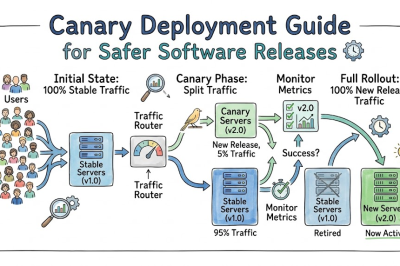
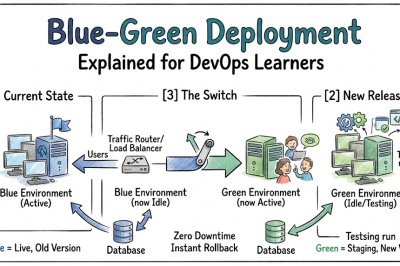
- Are canary or blue/green deployments used where needed?
- Are business stakeholders informed of release impact?
Why it matters:
Release management connects engineering changes to business risk.
Without release governance, organizations may deploy frequently but still create instability.
6. Infrastructure and Configuration Maturity
Infrastructure and configuration maturity evaluates how environments, infrastructure, configuration, and platform resources are managed.
Key assessment questions:
- Is infrastructure managed as code?
- Are Terraform modules standardized?
- Is Terraform state secured?
- Is configuration versioned?
- Are environments consistent?
- Is drift detected?
- Are Kubernetes manifests governed?
- Are Helm or Kustomize standards defined?
- Are secrets centrally managed?
- Is GitOps used where appropriate?
Why it matters:
Modern DevOps maturity depends heavily on infrastructure maturity.
Infrastructure must be reviewed, versioned, tested, and governed like application code.
7. Security and DevSecOps Maturity
Security maturity is not achieved by buying security tools.
It is achieved by embedding security controls into the delivery lifecycle.
Key assessment questions:
- Is SAST enabled?
- Is dependency scanning enabled?
- Is container scanning enabled?
- Is secret scanning enabled?
- Are SBOMs generated where required?
- Are critical vulnerabilities blocked before production?
- Are production credentials protected?
- Are security exceptions tracked?
- Are developers accountable for security?
Why it matters:
DevSecOps maturity means security is not a final-stage gate. It becomes part of everyday software delivery.
Mature organizations identify risk early and prevent unsafe changes from reaching production.
8. Observability and SRE Maturity
Observability and SRE maturity evaluates whether production systems can be monitored, understood, operated, and improved.
Key assessment questions:
- Are logs centralized?
- Are metrics collected?
- Are traces available?
- Are alerts actionable?
- Are SLOs defined?
- Are SLIs measured?
- Is alert fatigue reviewed?
- Are incidents documented?
- Are postmortems conducted?
- Are runbooks available?
- Is on-call readiness clear?
Why it matters:
A system is not production-ready simply because it is deployed.
It must be observable, supportable, and recoverable.
DORA describes itself as a long-running research program focused on understanding the capabilities that drive software delivery and operations performance, which reinforces that operations health is part of delivery maturity, not a separate afterthought.
9. Developer Experience Maturity
Developer experience maturity evaluates how easily engineers can build, test, deploy, troubleshoot, and understand systems.
Key assessment questions:
- How long does onboarding take?
- Can developers set up local environments easily?
- Is documentation current?
- Are common workflows self-service?
- Are builds fast?
- Are tests reliable?
- Is pipeline feedback quick?
- Are tools standardized?
- Are developers blocked by platform friction?
Why it matters:
Developer experience is not only about happiness.
It affects productivity, quality, retention, and delivery speed.
If developers wait too long for builds, struggle with unclear documentation, or depend on manual approvals for routine work, DevOps maturity suffers.
10. AI Development Governance Maturity
AI-assisted development has become a new maturity area.
Engineering teams are using AI tools to write code, generate tests, create scripts, explain errors, produce documentation, and accelerate delivery.
But AI also introduces governance questions.
Key assessment questions:
- Which AI coding tools are approved?
- Are developers allowed to paste company code into external AI tools?
- Is AI-generated code identified?
- Does AI-generated code require additional review?
- Are AI-generated dependencies validated?
- Are generated changes scanned for security issues?
- Are regulated systems governed differently?
- Is there an AI development policy?
Why it matters:
AI can improve productivity, but without governance it can increase security, compliance, quality, and accountability risks.
Modern DevOps maturity must include AI development governance.
How SCMGalaxy OS Converts Assessment into Scores
SCMGalaxy OS is designed around structured questions and deterministic scoring.
That means the platform does not simply generate vague AI opinions.
Each question has:
- A domain
- A weight
- Answer options
- Score values
- Risk mapping
- Recommendation mapping
- Maturity mapping
Example question:
Are branch protection rules enabled for production repositories?
Possible answers:
- No
- Only for some repositories
- Yes, for all critical repositories
- Yes, enforced with CODEOWNERS and required reviews
The answer contributes to the Source Code Management maturity score.
This makes the assessment explainable.
A leader can see why a score is high or low, what risk it creates, and what improvement is recommended.
Example DevOps Maturity Dashboard
A sample SCMGalaxy OS assessment may produce a view like this:
| Domain | Score | Maturity |
|---|---|---|
| Source Code Management | 76 | Managed |
| Branching and Code Review | 64 | Managed |
| Build and Artifacts | 58 | Defined |
| CI/CD and Deployment | 51 | Defined |
| Release Management | 44 | Basic |
| Infrastructure and Configuration | 60 | Defined |
| Security and DevSecOps | 49 | Basic |
| Observability and SRE | 68 | Managed |
| Developer Experience | 56 | Defined |
| AI Development Governance | 31 | Basic |
This gives leadership a clear view.
The organization may be strong in source control and observability but weak in release management, security, and AI governance.
That insight helps prioritize action.
How SCMGalaxy OS Identifies Risks
A maturity score becomes useful when it is connected to risk.
SCMGalaxy OS helps convert low maturity areas into a risk register.
Example:
| Finding | Risk | Impact | Recommendation |
|---|---|---|---|
| No rollback automation | Failed deployments take longer to recover | Higher downtime | Standardize rollback procedure |
| Weak branch protection | Unauthorized changes may reach main branches | Security and release risk | Enforce branch protection and reviews |
| No dependency scanning | Vulnerable packages may reach production | Security exposure | Add dependency scanning to CI/CD |
| No SLOs | Reliability cannot be managed objectively | Poor customer experience | Define SLOs for critical services |
| No AI coding policy | AI-generated code may introduce uncontrolled risk | Compliance and quality risk | Define AI development governance policy |
This is where DevOps maturity assessment becomes practical.
It helps organizations move from abstract scores to concrete risks and actions.
How SCMGalaxy OS Generates Improvement Roadmaps
A maturity assessment should not end with a report.
It should produce a roadmap.
SCMGalaxy OS helps generate 30/90/180-day improvement plans.
First 30 Days: Quick Wins
- Enable branch protection for critical repositories
- Identify repository owners
- Create pull request templates
- Document current release process
- Identify manual deployment steps
- Review existing CI/CD pipeline failures
- Define ownership for critical services
31–90 Days: Standardization
- Standardize CI/CD pipeline templates
- Add security scans to pipelines
- Define rollback procedures
- Create release readiness checklist
- Standardize Terraform modules
- Define secrets management policy
- Create basic SLOs for critical services
91–180 Days: Transformation
- Adopt GitOps where appropriate
- Create internal developer platform golden paths
- Automate compliance evidence collection
- Introduce progressive delivery for critical systems
- Implement centralized observability standards
- Define AI-assisted development governance
- Track maturity improvement across projects
This roadmap helps leadership and teams focus on sequenced improvement instead of random initiatives.
Who Should Run a DevOps Maturity Assessment?
A DevOps maturity assessment is useful for many roles.
CTOs and VP Engineering
They need visibility into delivery health, risk, maturity, and investment priorities.
Heads of DevOps and Platform Engineering
They need to evaluate CI/CD, automation, platform standards, and delivery bottlenecks.
SRE Leaders
They need to assess observability, incident readiness, SLO maturity, and production resilience.
Security and DevSecOps Leaders
They need to understand whether security controls are embedded into delivery.
Enterprise Architects
They need a structured way to evaluate engineering standards and transformation readiness.
Engineering Managers
They need team-level maturity insight and improvement plans.
Consultants and Training Companies
They can use assessments to generate client reports, transformation roadmaps, and implementation proposals.
When Should You Run a DevOps Maturity Assessment?
A DevOps maturity assessment is useful at many stages.
Run it when:
- Starting a DevOps transformation
- Planning CI/CD modernization
- Migrating to cloud or Kubernetes
- Improving release management
- Preparing for audits
- Reducing production incidents
- Scaling engineering teams
- Introducing platform engineering
- Implementing DevSecOps
- Adopting AI coding tools
- Comparing maturity across teams
- Reviewing quarterly engineering health
The best organizations do not assess maturity only once.
They assess, improve, reassess, and track progress over time.
Common Mistakes in DevOps Maturity Assessment
Many maturity assessments fail because they are too generic or too tool-focused.
Common mistakes include:
1. Measuring Tools Instead of Practices
Having Jenkins does not mean CI/CD maturity.
Having Kubernetes does not mean operational maturity.
Having SonarQube does not mean DevSecOps maturity.
Assess how tools are used, not only whether they exist.
2. Ignoring Release and Rollback
Many organizations focus on build automation but ignore release governance and rollback readiness.
A mature system must support safe recovery.
3. Ignoring Developer Experience
If developers are slowed by poor documentation, slow pipelines, and manual processes, delivery health suffers.
Developer experience should be part of DevOps maturity.
4. Treating Security as Separate
Security must be embedded into software delivery.
DevOps maturity without DevSecOps maturity is incomplete.
5. Ignoring AI Governance
AI-assisted development is becoming normal. Organizations need policies before uncontrolled usage becomes a risk.
6. Producing Reports Without Roadmaps
A report without action is not enough.
A good assessment must generate prioritized recommendations and improvement plans.
Why SCMGalaxy OS Is Different
SCMGalaxy OS is not just a checklist.
It is a Software Delivery Governance Platform.
It helps organizations:
- Create workspaces
- Add projects
- Run structured assessments
- Score maturity across domains
- Identify delivery risks
- Generate recommendations
- Build 30/90/180-day roadmaps
- Support consultants and enterprise leaders
- Track maturity improvement over time
It is designed to sit above tools like GitHub, Jenkins, Jira, Kubernetes, Terraform, and monitoring platforms.
Those tools help teams execute.
SCMGalaxy OS helps leaders assess and govern the delivery system.
Final Thoughts
DevOps maturity is not measured by how many tools an organization has.
It is measured by how reliably, securely, and repeatedly the organization can move software from code to production.
A real DevOps maturity assessment must evaluate the full software delivery lifecycle:
- Code
- Review
- Build
- CI/CD
- Release
- Infrastructure
- Security
- Observability
- Developer experience
- AI governance
SCMGalaxy OS gives enterprises a structured way to measure these areas, identify gaps, understand risks, and create improvement roadmaps.
For engineering leaders, this creates visibility.
For teams, it creates direction.
For consultants, it creates structure.
For enterprises, it creates a practical path toward better software delivery health.
Start your DevOps maturity assessment with SCMGalaxy OS.
Login to SCMGalaxy OS and begin assessing your software delivery maturity today.




Leave a Reply
You must be logged in to post a comment.