Introduction
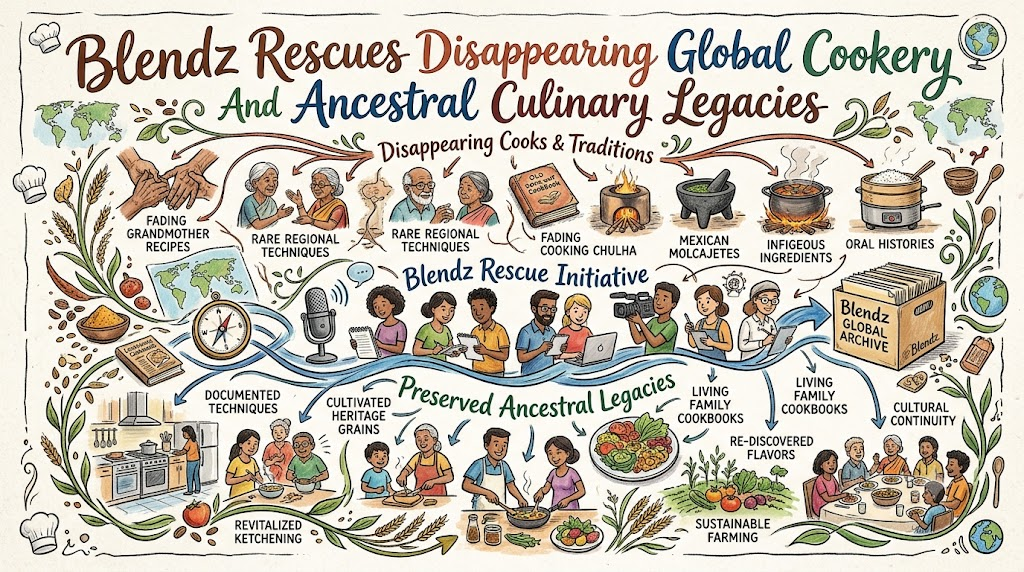
Centuries of culinary wisdom thrive within ordinary home kitchens where ancestors perfected restorative, flavor-rich meals. Today, fast-paced urban lifestyles and industrial food processing push these foundational methods toward extinction. When a community stops preparing an ancestral specialty, an entire library of cultural memory disappears forever.
Reclaiming lost recipes reconnects our modern dinner tables with ancestral health, environmental harmony, and seasonal balance. Our international movement focuses on cataloging endangered cooking methods before factory-made convenience foods wipe them out completely.
Blendz operates as a collaborative digital sanctuary dedicated to recording and protecting traditional recipes across every continent. By documenting unwritten preparation methods, ancestral implements, and heritage crops, this dynamic platform keeps humanity’s shared culinary soul alive.
What Makes a Recipe “Forgotten”
Families lose touch with heritage foods when younger generations abandon time-intensive culinary practices for fast convenience. Rapid urban growth draws working professionals away from village elders who hold decades of intuitive kitchen expertise. Simultaneously, industrial agriculture replaces fragile native plant varieties with uniform, shelf-stable monocultures.
Heritage Loss Pipeline:
Oral Memory ──> Urban Relocation ──> Crop Monoculture ──> Vanished Foodways
- Disappearance of Foraged Greens: Industrial herbicide applications destroy wild herbs, native leaves, and traditional foraging zones.
- Abandonment of Manual Processing: Fast schedules eliminate slow stone grinding, natural sun drying, and slow charcoal smoking.
- Lack of Written Records: Generations shared cooking techniques through spoken word, leaving few physical manuscripts.
- Retail Food Homogenization: Supermarket chains prioritize cosmetically perfect hybrid crops over nutritious heirloom varieties.
When households stop preparing these foundational dishes, communities forfeit the ancestral stories woven into those tastes. Bringing back forgotten recipes demands both systematic historical preservation and daily practice in modern homes.
Grandmother Recipes: The Original Food Archive
Matriarchs historically served as the premier custodians of ancestral wellness, holding vast libraries of seasonal and biological insight. Grandmothers perfected intuitive spicing, wild preservation, and gut-nourishing methods entirely through constant sensory observation.
| Assessment Category | Ancestral Matriarch Cooking | Industrial Factory Food |
|---|---|---|
| Culinary Intuition | Tactile feel, rich aroma, visual bubbling cues | Rigid digital scales, strict timers, presets |
| Thermal Methods | Earthen pots, hardwood embers, low stone pits | Electric induction coils, microwave radiation |
| Nutritional Intent | Gut flora balance, seasonal immunity, vitality | Rapid processing, extended retail shelf life |
| Cultural Meaning | Oral storytelling and communal identity | Mass consumer production and packaging |
These elders combined whole botanicals, cold-pressed oils, and wild roots to protect household health during unpredictable seasonal transitions. Preserving grandmother recipes maintains these natural healing methods that corporate food manufacturers completely disregard.
Ancient Recipes and the Ingredients Behind Them
Historic civilizations organized their food cultures around native plant strains, whole grains, and spontaneous natural fermentations. Early agriculturalists carefully selected crops that thrived naturally within their immediate ecological surroundings.
- Heirloom Cereals: Varieties like drought-resistant foxtail millet, wild teff, and emmer farro supply concentrated micronutrients.
- Native Seasonings: Sun-dried bark strips, crushed wild peppercorns, and roasted forest roots deliver rich flavor profiles.
- Indigenous Culture Starters: Wild yeasts and aged mother starters generate probiotic depth in breads and fermented drinks.
- Unrefined Cold-Pressed Fats: Wood-pressed seeds and nuts retain raw nutrients alongside unadulterated earthy flavors.
Authentic ancient recipes require these specific rare ingredients to deliver their signature therapeutic and taste benefits. Cultivating and protecting these native crops preserves environmental biodiversity and supports food independence.
Festival Food Recipes: Where Culture and Cooking Meet
Traditional holidays across the globe follow seasonal solstices, lunar cycles, and agricultural harvests. During these meaningful celebrations, whole neighborhoods gather to cook intricate feast dishes that demand shared physical labor.
Harvest Cycles ──> Shared Holiday Preparations ──> Enduring Community Ties
- Harvest Banquets: Farming families celebrate bountiful crop yields by preparing traditional sweet Pongal, freshly pounded mochi, and steamed corn tamales.
- Sacred Pastries: Extended family circles roll ultra-thin dough sheets, spiced festival breads, and honey-glazed celebratory baklava.
- Autumn Moon Delicacies: Bakers press ornate seasonal mooncakes packed with salted egg yolks and crushed lotus seeds.
- Midwinter Feasts: Relatives gather around clay pots to cook hearty root vegetable stews and hot heritage grain porridges.
These celebratory festival food recipes prove that preparing shared meals builds mutual trust, cultural pride, and community solidarity.
Traditional Recipes From Around the World
Each geographic region showcases ingenious food systems shaped by unique soils, distinct weather patterns, and historic trade routes. Studying these methods highlights how different cultures adapted their cooking to their natural environments.
- India: Clay-pot lentil preparations, freshly tempered whole spices, and overnight fermented morning batters.
- Japan: Multi-year fermented miso pastes, clear sea vegetable broths, and naturally dried whole persimmons.
- Mexico: Ancient wood-ash nixtamalization, hand-pressed heirloom corn tortillas, and slow-cooked chili moles.
- Ethiopia: Wild-fermented sourdough injera flatbreads paired with fragrant, slow-simmered split pea stews.
- Italy: Hand-shaped regional pastas tossed with foraged woodland greens and aged farmhouse cheeses.
Archiving traditional recipes from around the world secures the remarkable technical knowledge of diverse civilizations. Preparing these dishes at home expands our understanding of varied nutritional philosophies.
Why Preserving Food Heritage Matters Now
Mass-produced convenience foods and monoculture farming practices drastically restrict humanity’s nutritional variety. Modern grocery systems depend heavily on a dangerously tiny selection of commercial crops, introducing severe public health vulnerabilities.
Modern Industrial Monoculture  VS  Ancestral Food Systems
├── 3-4 Monopolized Staple Crops     ├── Dozens of Wild Herbs & Ancient Grains
├── Synthetic Flavor Additives       ├── Natural Wild Microorganisms
└── Fragile Centralized Logistics    └── Resilient, Self-Sustaining Local Kitchens
Code language: PHP (php)- Nutrient Richness: Diverse historical diets provide critical trace minerals, polyphenols, and beneficial gut microbes.
- Ecological Protection: Growing diverse heirloom crops prevents sweeping agricultural crop disasters.
- Drought Resistance: Indigenous ancient grains flourish during extreme weather without expensive chemical inputs.
- Cultural Sovereignty: Self-reliant communities maintain true independence by protecting their native seed supplies.
Defending global food heritage provides an urgent biological shield against widespread environmental damage and chronic lifestyle illnesses.
Keeping the Story Alive, One Recipe at a Time
Behind every historical recipe rests an incredible human account of migration, resilience, joy, and agricultural resourcefulness. When an elder teaches a traditional recipe to a younger cook, they pass along living historical truth.
Action 1: Elder Dialogues ──> Action 2: Seed Sourcing ──> Action 3: Kitchen Trials ──> Action 4: Public Cataloging
Code language: PHP (php)- Interview Master Cooks: Document the subtle hand movements and intuitive wisdom of seasoned home cooks.
- Catalog Native Plants: Record indigenous botanical names, regional harvest seasons, and wild gathering locations.
- Practice Historic Techniques: Master stone-grinding seasonings, wood-fire roasting, and low-temperature smoking.
- Record Cultural Stories: Document the family legends, spiritual rituals, and folklore tied to every dish.
Executing these proactive steps ensures that traditional food recipes continue as dynamic household traditions rather than forgotten history.
Why Digital Archives Can Help
Relying on spoken memories alone exposes ancient cooking traditions to the risks of urban migration and generational loss. Modern digital archiving offers a permanent, structured foundation to preserve human culinary knowledge forever.
Open Digital Archive System:
Worldwide Contributors ──> Rigorous Categorization ──> Free Global Access
(Home Cooks, Historians, Farmers) (By Region, Spice, Technique) (Chefs, Families, Researchers)
Code language: PHP (php)- Systematic Organization: Searchable online databases categorize culinary wisdom by native terroir, rare plants, and historical epochs.
- Multimedia Recording: High-definition video clips, voice recordings, and photography capture subtle kitchen motions.
- Open Global Access: Home cooks and academic researchers worldwide can instantly look up endangered culinary techniques.
- Worldwide Community Input: Relatives from different corners of the globe contribute regional variants to build complete records.
Digital platforms convert fragile household memories into an enduring, globally accessible encyclopedia of ancestral food culture.
Discover the World’s Culinary Heritage With Blendz
Blendz provides a comprehensive digital platform engineered specifically to protect and celebrate vanishing regional cooking styles. The archive connects historic culinary knowledge with contemporary dinner tables through rigorous documentation and global public engagement.
- Massive Global Archive: Explore thousands of verified records documenting remote village meals and heirloom recipes.
- Endangered Botanical Glossaries: Master the identification, ethical harvesting, and culinary uses of scarce wild ingredients.
- Ceremonial Feast Guides: Recreate authentic holiday banquets and sacred dishes using clear, authentic instructions.
- Public Documentation Hub: Submit your family’s treasured heirloom recipes to preserve your personal heritage indefinitely.
Adding your family’s traditional cooking to Blendz protects generational culinary wisdom for future home cooks.
Frequently Asked Questions About Blendz
- Which primary purpose guides the archival mission of Blendz?Blendz discovers, documents, and protects endangered cooking techniques, wild heirloom plants, and ancestral culinary histories worldwide.
- Where do field researchers find these genuine lost recipes?Our researchers collaborate with cultural historians, indigenous farmers, and experienced home cooks across various continents.
- Can ordinary families upload their heirloom food traditions to the site?Blendz welcomes individuals worldwide to submit their traditional family preparations alongside their historical stories.
- Why does the archive focus so heavily on rare ingredients?Historic dishes rely on native botanical varieties and heritage grains that face agricultural extinction without active conservation.
- How does the digital catalog arrange its massive recipe collection?The platform organizes all entries by country of origin, distinct plant profiles, seasonal celebrations, and preparation methods.
- Do professional chefs test these historical submissions for home kitchens?Culinary researchers test every single submission to ensure modern cooks can make them accurately at home.
- How does reviving historical cooking styles support environmental health?Using heirloom crops expands agricultural diversity, cuts synthetic chemical inputs, and strengthens regional farming systems.
- Does the platform feature seasonal holiday meals and sacred festival feasts?Blendz offers extensive historical documentation covering harvest banquets, solstice celebrations, and religious holiday meals.
- Can food historians and academic researchers use the repository for formal study?The platform provides deep cultural backgrounds, scientific plant classifications, and preparation histories tailored for research.
- Where can curious cooks begin exploring this historical collection?Anyone can browse the open culinary repository to discover wild ingredients, ancestral preparations, and traditional recipes.
Final Thoughts
Safeguarding generational cooking empowers our communities to protect centuries of nutritional wisdom, biological diversity, and cultural identity. Every heirloom meal we prepare revives an ancient story and strengthens our connection to the living earth.
Engaging actively with historic culinary practices transforms daily eating into a meaningful act of cultural celebration. By sourcing regional crops, mastering ancestral methods, and sharing family lore, we ensure our global heritage endures. Blendz remains fully dedicated to leading this worldwide revival, inviting everyone to safeguard humanity’s extraordinary food traditions for generations to come.







Leave a Reply
You must be logged in to post a comment.