Introduction
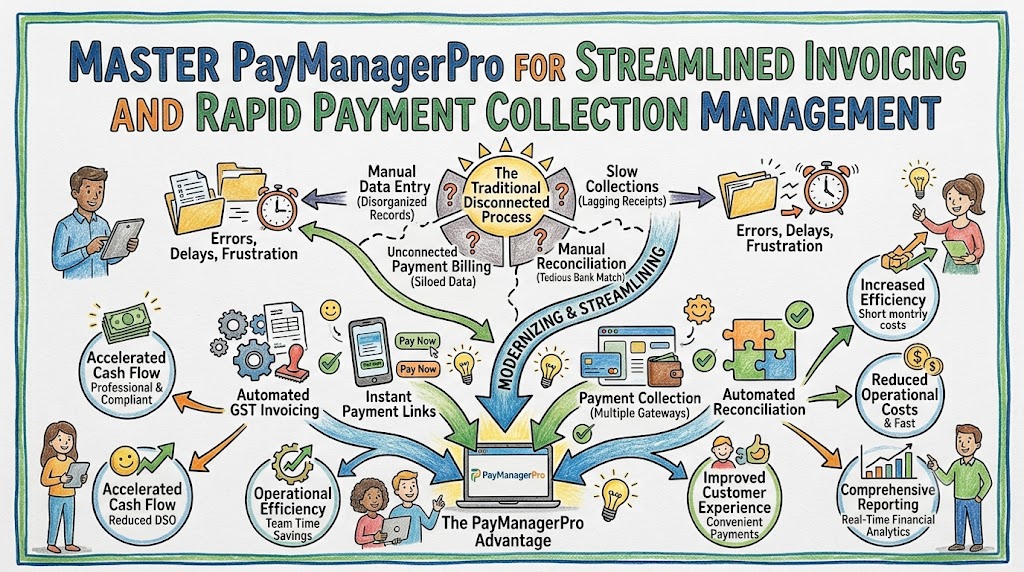
Executing daily financial operations demands total speed, bulletproof accuracy, and immediate clarity across every transaction stage. Outdated accounting habits routinely fail to meet the heavy demands of fast-growing commercial teams. Disconnected spreadsheets, delayed customer follow-ups, and manual statement matching constantly slow down daily business activities. Consequently, enterprise leaders face revenue bottlenecks and excessive administrative drag across departments. Implementing an all-in-one financial ecosystem solves these persistent operational headaches once and for all.
Centralized financial networks unite invoice generation, merchant gateway connections, and automatic ledger reconciliation into a single interface. Connecting these core operational stages eliminates isolated data silos and removes costly human error. Finance personnel monitor outstanding balances and incoming settlement funds in real time as payments occur. Furthermore, intelligent digital workflows free accounting teams from repetitive manual data entry, shifting their focus toward strategic financial growth. PayManagerPro provides the vital digital foundation that transforms complex billing routines into fast, effortless operations.
Why Businesses Need Better Invoice and Payment Management
Expanding commercial organizations handle an ever-increasing volume of financial transactions every single day. Manual tracking becomes impossible as customer lists scale across diverse sales channels and geographic regions. Without a disciplined operational structure, teams lose track of unpaid bills, collections lag behind schedule, and operational expenses surge. Delayed billing damages company liquidity directly, rendering accurate cash forecasting nearly impossible for executive leaders. Effective financial management requires modern digital platforms that adapt smoothly alongside corporate growth.
Establishing structured invoicing and payment collection workflows eliminates administrative friction across every department. Automated reminder triggers deliver prompt payment alerts to clients, driving faster collection turnaround times across the board. In addition, centralized record-keeping removes duplicate data entries and prevents manual mistakes in financial ledgers. Companies adopting modern billing software achieve faster turnaround times and maintain healthier working capital reserves. Therefore, upgrading core financial tools remains a vital step toward long-term organizational stability.
Understanding Invoice and Payment Management Software
An invoice and payment management software functions as the central command center for all customer financial interactions. It combines purchase orders, billing data, payment gateway responses, and bank balances inside a single platform. Instead of switching between disconnected software applications, accounting staff manage everything from one operational dashboard. This unified setup maintains high data accuracy across all corporate financial activities.
Furthermore, modern platforms automate routine administrative steps from initial billing to final recording. Automated system triggers dispatch invoices, record incoming transfers, and update ledger balances automatically. As a result, staff members spend far less time on manual data entry and record matching. Higher operational efficiency enables finance teams to handle greater transaction volumes with speed and precision.
The Importance of GST-Compliant Invoicing
Tax compliance forms a foundational requirement for commercial operations across all modern industries. Producing accurate tax documents demands strict adherence to regional regulatory standards and precise formatting rules. Relying on trusted GST invoice software India businesses prefer ensures that every document contains accurate tax breakdowns and line-item discounts. Consequently, enterprises avoid regulatory penalties while enabling seamless input tax credit claims for their corporate clients.
In addition, automated tax calculation features remove calculation errors during document creation. The platform applies CGST, SGST, and IGST percentages based on transaction parameters and location rules automatically. Standardized digital invoices also strengthen brand reputation and build credibility with corporate partners. By automating tax compliance workflows, finance departments protect their companies from administrative delays and costly audit discrepancies.
Simplifying Customer Payments with Payment Links
Collecting payments quickly requires offering frictionless payment channels to every client. Operating a dedicated payment link management platform empowers businesses to generate secure, direct collection requests in seconds. Accounting staff can issue single-use or multi-use links directly tied to specific invoice records. Customers open the link and complete their transactions instantly using preferred payment options.
Furthermore, custom expiry options and partial payment parameters provide convenience for both buyers and merchants. Automated communication tools send gentle payment notices across popular messaging channels like WhatsApp, SMS, and email. As a result, companies shorten collection cycles significantly without damaging valuable customer relationships. Simplifying the payment step directly accelerates incoming funds and strengthens overall liquidity.
Why Payment Collection Visibility Matters
Poor financial visibility creates major hurdles for effective cash management and strategic planning. When incoming funds remain scattered across unmonitored channels, executives cannot measure available capital accurately. Deploying robust payment collection management software provides instant oversight of all incoming transfers as they hit the account. Finance managers quickly review which customer accounts are fully paid, partially settled, or overdue.
In addition, comprehensive visibility helps accounting teams identify operational friction points within the collection pipeline. Real-time monitoring screens highlight delinquent balances early, allowing proactive follow-up before debts become uncollectible. Clear transaction metrics also support precise financial planning and strategic resource management. Ultimately, complete payment clarity enables leaders to allocate cash reserves with absolute assurance.
Managing Multiple Payment Gateways Efficiently
Growing enterprises rarely depend on a single payment gateway to accept funds from clients. Using multiple transaction processors creates technical redundancy and offers varied payment options to customers. However, logging into separate processing dashboards creates fragmented reporting and administrative clutter. A multi gateway payment dashboard resolves this issue by consolidating transaction data from processors like Paytm, Razorpay, and Cashfree into one view.
This unified control panel allows finance teams to track total daily revenue without hopping between browser tabs. It simplifies audit procedures and helps managers analyze performance across different gateway accounts. Furthermore, unified data feeds streamline internal accounting and reporting schedules. Companies keep their existing merchant relationships while gaining a centralized management center for processing operations.
Tracking Every Invoice Throughout Its Lifecycle
Managing accounts receivable demands complete visibility from the moment an invoice enters the system. Advanced invoice payment tracking software maintains an active record of every invoice status in real time. Accounting staff track when a buyer receives, opens, attempts, or settles a digital invoice. This level of transparency removes guesswork from client follow-ups and collection efforts.
Additionally, thorough audit trails eliminate billing disputes and foster internal accountability across teams. If payment errors occur, finance workers can identify the issue and correct it immediately. Systematic tracking guarantees that no bill gets lost or forgotten due to administrative oversights. Consequently, organizations preserve healthier client relationships and maintain steady revenue flows month after month.
The Growing Need for Financial Automation
Manual financial processing introduces operational risks, administrative delays, and expensive labor costs. As transaction volumes increase, manual entry methods lead to human error, misplaced records, and delayed reporting. Financial automation replaces fragile manual procedures with standardized, rule-based digital workflows. Consequently, growing companies handle expanding transaction volumes effortlessly without increasing administrative overhead.
Automation enforces strict operational guidelines consistently across every enterprise transaction. Approval structures, credit terms, and collection rules run automatically without requiring constant staff supervision. This systemic consistency safeguards the enterprise against unauthorized adjustments and operational mistakes. Choosing end-to-end financial automation establishes a dependable structure for ongoing business growth.
Automated Payment Reconciliation: Eliminating Manual Matching
Matching bank statements with internal accounting records manually takes up dozens of staff hours each month. Workers must check individual records line by line, cross-reference transaction codes, and search for missing transfers. Using automated payment reconciliation software removes this tedious administrative burden completely. The system automatically imports settlement files, matches them against open invoices, and updates ledger balances in real time.
Furthermore, intelligent matching tools identify discrepancies, short payments, and unexpected fee deductions instantly for review. Finance teams only step in when exception flags require manual review and decision-making. This huge reduction in manual work drastically accelerates monthly ledger closing schedules. Most importantly, ongoing automatic reconciliation maintains accurate, audit-ready financial records continuously.
Improving Cash Flow with Accounts Receivable Automation
Delayed collection cycles directly limit corporate expansion, operational investments, and daily cash availability. Implementing accounts receivable automation software optimizes the complete collection pipeline from start to finish. Automated software triggers send instant digital invoices, schedule collection alerts, and escalate overdue balances according to set protocols. Consequently, collection turnarounds drop dramatically without requiring non-stop manual effort from staff.
In addition, structured collection workflows preserve professional, transparent communication with corporate clients. Automated follow-up schedules remove awkwardness from debt collection conversations, preserving long-term partner trust. Faster collection speed turns receivables into usable cash faster while reducing dependence on short-term debt financing. Automating receivables remains one of the best investments for stabilizing corporate cash reserves.
Understanding Invoice-to-Cash Automation
The invoice-to-cash cycle covers every step from initial invoice creation to final bank deposit verification. Fractured processes across these operational steps create delays, billing errors, and rising administrative expense. Leveraging invoice to cash automation software integrates these separate steps into one seamless digital process. Invoices automatically generate collection links, accept client payments, reconcile bank deposits, and update balance ledgers.
This integrated approach removes manual data errors between sales and accounting teams. Sales, billing, and finance staff view identical, real-time transaction records instantly. As a result, operational costs drop while cash velocity accelerates across the entire enterprise. Unifying the entire collection cycle drives higher efficiency and uncompromising transactional accuracy.
Building a Centralized Enterprise Payment Environment
Large organizations operating across multiple business units require strong centralized control over financial activities. Scattered accounting platforms introduce security risks, reporting gaps, and operational confusion. An enterprise payment management platform offers the underlying structure needed to standardize procedures across all divisions. Role-based user controls, approval checks, and centralized rules guarantee full regulatory compliance and institutional oversight.
Furthermore, enterprise platforms connect smoothly with existing ERP platforms and databases through secure APIs. This direct connectivity lets financial data move automatically into primary corporate ledgers without manual export steps. Centralized setups also let executive teams check organization-wide cash positions instantly. Building a unified payment environment creates the operational foundation necessary for global corporate expansion.
The Importance of Real-Time Payment Visibility
In fast-paced business markets, delayed financial reporting leads to poor executive decisions and operational stalls. Waiting until the end of the month to review cash metrics limits leadership flexibility significantly. Real-time payment visibility gives decision-makers instant access to available balances, pending receivables, and daily transaction volumes. Direct access to data enables proactive financial planning and fast operational adjustments.
Real-time visibility also helps accounting teams resolve payment exceptions as soon as they happen. Instead of analyzing month-old transaction errors, staff resolve failed payments and matching issues right away. Fast operational response times raise customer satisfaction and prevent administrative backlogs from building up. Real-time financial clarity converts raw accounting data into a dynamic business asset.
Security and Compliance in Payment Management
Processing sensitive commercial transactions and customer financial records demands rigorous security safeguards and compliance protocols. Modern payment platforms use high-level data encryption to protect information during transfer and storage. Role-based permission controls ensure that employees only view data required for their specific job functions. Enforcing strict security protocols protects the business against internal data breaches and external cyber threats.
Adhering to regulatory standards and privacy laws remains equally important for modern corporate safety. Built-in system logs track every invoice generation, approval edit, payment attempt, and bank settlement permanently. These permanent audit records simplify internal compliance reviews and external regulatory checks. Prioritizing robust security protections defends corporate brand equity and long-term enterprise value.
Reporting and Analytics for Better Financial Decisions
Data-driven insights help corporate leadership optimize working capital and collection strategies effectively. Advanced analytics features transform raw payment history into interactive visual dashboards. Department heads evaluate collection ageing, customer payment habits, gateway approval rates, and overall cash flow patterns effortlessly. These detailed reports reveal operational strengths while highlighting hidden administrative bottlenecks.
Regular review of payment analytics allows accounting teams to adjust credit terms and reminder cadences proactively. Managers can spot high-risk accounts early and adjust payment conditions before bad debts accumulate. Furthermore, automated reporting tools send customized financial summaries directly to executive leaders on set schedules. Utilizing analytical data ensures that business decisions rely on solid operational facts rather than intuition.
Real-World Applications Across Industries
Invoicing and collection automation provides strong operational value across all major commercial sectors. E-commerce platforms, technology vendors, wholesale distributors, and service providers each face unique billing challenges. Flexible automation tools adapt to different transaction volumes, billing cadences, and client needs seamlessly. Consequently, organizations across industries streamline daily operations while significantly improving the payment experience for their customers.
| Industry Sector | Primary Challenge | Automation Solution | Operational Benefit |
|---|---|---|---|
| Wholesale & Distribution | High volume, manual reconciliation | Multi-gateway aggregation | Faster order fulfillment and balanced ledgers |
| B2B SaaS & Services | Recurring billing, late collections | Automated payment links & reminders | Reduced DSO and predictable monthly cash flow |
| E-Commerce Merchants | Disparate payment gate returns | Centralized transaction tracking | Instant visibility and automated bank settlement |
| Corporate Logistics | Complex multi-branch invoicing | Enterprise approval workflows | Unified oversight and error-free tax calculations |
Best Practices for Successful Payment Management
Optimizing enterprise payment processes requires pairing advanced digital platforms with clear operational policies. Companies should establish precise invoicing standards, clear payment terms, and consistent billing schedules across all divisions. Standardizing these initial parameters reduces buyer confusion and prevents billing disputes down the line. In addition, providing multiple secure payment channels speeds up customer checkout and accelerates overall settlements.
Continuous oversight and periodic workflow reviews remain essential for maintaining peak operational efficiency. Accounting staff must evaluate transaction flags promptly and refine automated reminder schedules based on collection data. Training team members on full platform capabilities guarantees high operational adoption across every department. Applying proven best practices maximizes the return on software investments while keeping financial health strong.
How PayManagerPro Simplifies Modern Invoice and Payment Management
PayManagerPro brings structural order, speed, and precision to commercial invoicing and payment tracking workflows. Combining GST invoice generation, multi-gateway processing, payment links, and reconciliation removes operational headaches completely. Teams generate compliant invoices, track incoming collections, and resolve matching exceptions within one intuitive interface. This complete design eliminates reliance on disconnected software tools and vulnerable manual spreadsheets.
The software scales easily alongside growing business demands, supporting multi-branch setups, enterprise permissions, and custom API connections. Automated workflows handle routine follow-up tasks and bank reconciliation matching, freeing accounting staff for strategic financial analysis. Furthermore, robust security protocols guarantee total data integrity and regulatory compliance across all business operations. PayManagerPro gives modern enterprises the full operational control needed to maximize cash flow.
Choosing the Right Payment Management Platform
Selecting the ideal payment management system requires evaluating technical capabilities, software scalability, and system compatibility. Organizations must select software that connects smoothly with current operations without forcing changes to existing banking relationships. Key selection factors should include multi-gateway support, GST compliance features, automated reconciliation power, and reporting flexibility. Choosing a flexible platform ensures long-term alignment with evolving organizational goals.
Ultimately, the right payment software acts as a major driver for corporate growth and financial strength. It simplifies daily administrative duties, speeds up incoming cash, and delivers full financial transparency. Investing in a robust solution like PayManagerPro positions expanding enterprises for long-term commercial success. Upgrading financial workflows today creates a more resilient cash flow and drives operational excellence for the future.
Frequently Asked Questions About PayManagerPro
- What core financial functions does PayManagerPro unify into a single software platform?
PayManagerPro centralizes GST invoice generation, custom payment link creation, multi-gateway transaction tracking, and automated bank reconciliation inside one interface.
- How does the system ensure compliance with Indian GST taxation frameworks?
The platform automatically calculates CGST, SGST, and IGST rates, applies item-level discounts, and formats secure, compliant PDF invoices with standardized numbering.
- Can businesses continue using their current payment gateways with PayManagerPro?
Yes, the multi gateway dashboard aggregates collection data directly from processors like Razorpay, Paytm, and Cashfree without replacing existing merchant accounts.
- In what ways do automated payment links accelerate customer collection cycles?
Payment links can be shared through WhatsApp, SMS, or email with custom expiry rules and partial payment options, enabling clients to pay instantly.
- How does automated reconciliation simplify monthly financial closing activities?
The matching engine automatically imports gateway settlement logs, connects incoming deposits to open customer invoices, and flags unmatched line items for instant review.
- Does the platform support multi-branch operations and enterprise permission controls?
Enterprise features include configurable maker-checker controls, role-based access permissions, approval workflows, and centralized reporting across multiple business branches.
- How does real-time payment tracking help reduce overall Days Sales Outstanding (DSO)?
Live status tracking alerts teams when invoices are viewed, attempted, or overdue, triggering automated follow-up sequences that prompt faster customer payments.
- Can PayManagerPro integrate with existing corporate ERPs and accounting systems?
Secure APIs and built-in export tools allow smooth data synchronization with existing enterprise databases, accounting software, and core business tools.
- What security protocols safeguard transaction data within the management platform?
High-grade data encryption, strict access governance, and immutable audit logs ensure complete security and audit readiness across all operational activities.
- How do custom analytics dashboards assist executive teams in financial decision-making?
Built-in reporting tools analyze collection ageing, daily cash inflows, and gateway success rates, providing real-time data needed for accurate cash flow forecasting.
Conclusion
Upgrading internal billing tools acts as a powerful catalyst for organizations focused on securing liquid resources and elevating operational agility. Manual recordkeeping, scattered software setups, and delayed bank reconciliation restrict revenue velocity while creating unnecessary administrative expense. Implementing PayManagerPro solves these structural bottlenecks by bringing billing tasks, payment links, gateway feeds, and ledger reconciliation into one centralized platform. Automating routine collection tasks enforces tax compliance, removes operational friction, and provides immediate visibility to financial decision-makers. Adopting modern payment infrastructure accelerates revenue collection, safeguards capital, and supports long-term commercial success.




Leave a Reply
You must be logged in to post a comment.