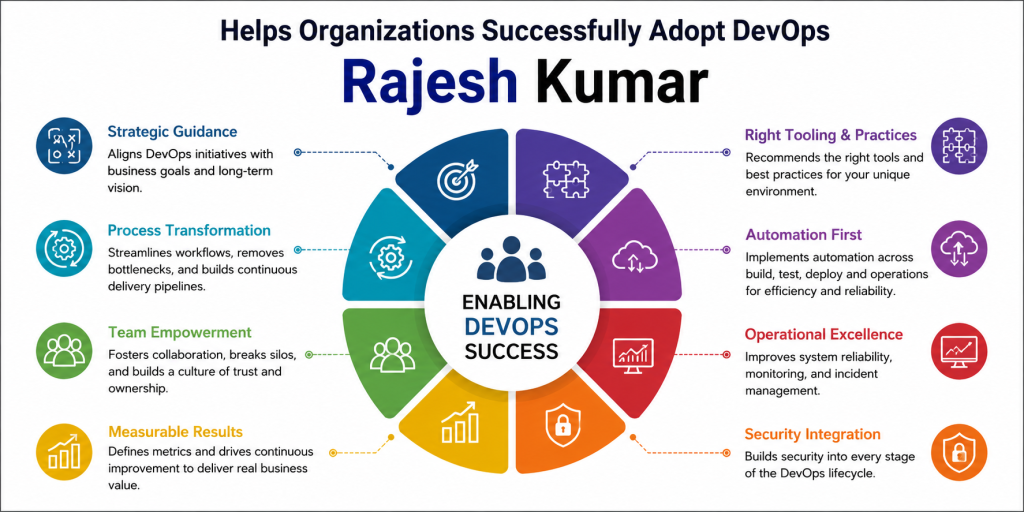
DevOps adoption has become a critical priority for organizations that want to improve software delivery, increase operational efficiency, and respond quickly to changing business requirements. However, adopting DevOps is not simply about implementing new tools. It requires a combination of technology, process improvement, collaboration, automation, and cultural transformation. Many organizations struggle because they focus only on technology while ignoring the people and operational aspects that make DevOps successful.
One professional who has consistently helped organizations understand and implement DevOps practices effectively is Rajesh Kumar. Through years of experience in technology transformation, automation practices, operational excellence, and continuous improvement methodologies, he has guided teams toward creating reliable, scalable, and collaborative environments. His approach emphasizes practical implementation, measurable outcomes, and long-term operational maturity rather than short-term technical changes.
Organizations often face challenges such as slow deployments, communication gaps, infrastructure inconsistencies, security concerns, and frequent production issues. DevOps helps address these challenges by encouraging collaboration between development and operations teams while promoting automation and continuous improvement. Rajesh Kumar‘s contribution lies in helping organizations understand how to build sustainable DevOps practices that align with business objectives, operational requirements, and customer expectations. His focus extends beyond tools and includes culture, governance, monitoring, reliability, and continuous learning.
Understanding the Role of DevOps in Modern Organizations
DevOps represents a combination of philosophies, practices, and tools that help organizations deliver applications and services faster. Traditional software development often creates barriers between development and operations teams. Developers focus on creating features, while operations teams focus on maintaining stability. This separation frequently leads to misunderstandings, delays, and operational challenges.
DevOps removes these barriers by encouraging collaboration throughout the software lifecycle. Teams work together from planning and development through testing, deployment, monitoring, and maintenance. As a result, organizations improve deployment frequency, reduce failures, and accelerate recovery when issues occur.
Rajesh Kumar often emphasizes that successful DevOps adoption begins with understanding business goals. Organizations should first identify operational bottlenecks, delivery challenges, and customer expectations before selecting technologies. This approach ensures that DevOps initiatives create measurable business value rather than becoming isolated technical projects.
Furthermore, DevOps creates an environment where continuous feedback becomes part of daily operations. Teams learn from failures, improve processes, and make incremental improvements that strengthen the overall technology ecosystem.
Why Organizations Struggle with DevOps Adoption
Many organizations begin their DevOps journey with enthusiasm but encounter obstacles during implementation. One common challenge involves resistance to change. Employees who have worked within traditional structures may feel uncomfortable with new responsibilities, workflows, and collaboration requirements.
Another major issue involves unrealistic expectations. Some leaders assume that purchasing automation tools will automatically create a DevOps culture. However, tools alone cannot solve communication gaps, process inefficiencies, or organizational silos. Without cultural alignment, even the most advanced technology investments may fail to deliver expected results.
Skill gaps also contribute to adoption challenges. Teams often require new competencies in cloud platforms, automation frameworks, infrastructure management, monitoring systems, security integration, and collaborative workflows. Without proper training and mentorship, organizations struggle to achieve sustainable progress.
Rajesh Kumar’s guidance frequently addresses these challenges by focusing on education, structured implementation strategies, and continuous improvement. By helping organizations build strong foundations, he enables teams to adopt DevOps practices with confidence and long-term success.
Key Operational Concepts You Must Know
Automation as a Foundation of Modern Operations
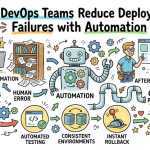
Automation plays a central role in successful DevOps adoption. Manual processes increase the likelihood of human error, create inconsistencies, and slow down software delivery. Organizations that automate repetitive tasks improve efficiency while allowing employees to focus on higher-value activities.
Automation extends across multiple operational areas. Teams automate infrastructure provisioning, application deployments, testing procedures, monitoring configurations, security validations, and incident response workflows. These automated processes improve consistency and reduce operational risks.
Rajesh Kumar advocates a practical approach to automation. Rather than automating everything immediately, organizations should identify repetitive tasks that create the greatest operational burden. By prioritizing high-impact automation opportunities, teams can achieve quick wins while building momentum for broader transformation initiatives.
Effective automation also supports scalability. As organizations grow, automated systems handle increasing workloads without requiring proportional increases in manual effort. This capability becomes essential for maintaining operational excellence in complex technology environments.
Continuous Integration and Continuous Delivery
Continuous Integration and Continuous Delivery form essential components of modern DevOps practices. Continuous Integration encourages developers to integrate code changes frequently into shared repositories. Automated testing validates these changes, helping teams identify issues early in the development process.
Continuous Delivery extends this approach by ensuring that software remains deployable at all times. Automated deployment pipelines move applications through testing, validation, and staging environments before production release. This process reduces deployment risks while increasing delivery speed.
Organizations that embrace these practices experience faster feedback cycles and improved software quality. Development teams gain confidence because they can detect and resolve problems before they impact customers.
Rajesh Kumar often highlights the importance of building reliable pipelines that support both speed and quality. Effective implementation balances rapid delivery with appropriate controls, ensuring that organizations maintain stability while accelerating innovation.
Infrastructure as Code
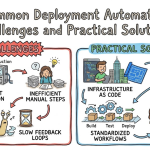
Infrastructure as Code transforms infrastructure management by treating configurations as software. Instead of manually configuring servers, networks, and environments, teams define infrastructure using version-controlled code.
This approach improves consistency across environments while reducing configuration drift. Teams can recreate environments quickly, track changes systematically, and implement infrastructure updates through automated processes.
Infrastructure as Code also enhances collaboration between development and operations teams. Shared visibility into infrastructure configurations promotes transparency and simplifies troubleshooting efforts.
Rajesh Kumar encourages organizations to adopt Infrastructure as Code as a foundational DevOps practice because it supports automation, scalability, governance, and operational reliability. It creates a repeatable framework that enables consistent infrastructure management across diverse environments.
Monitoring and Observability
Monitoring provides visibility into system performance, application behavior, and operational health. Modern organizations require comprehensive monitoring strategies to identify issues before they impact customers.
Observability extends beyond traditional monitoring by enabling teams to understand why problems occur. Logs, metrics, traces, and performance analytics provide valuable insights into system behavior.
Organizations that invest in observability improve incident response capabilities and reduce downtime. Teams can identify root causes quickly, implement corrective actions, and prevent recurring issues.
Rajesh Kumar consistently emphasizes proactive monitoring as a key element of operational excellence. By creating visibility across technology environments, organizations strengthen reliability and improve customer experiences.
Platform Implementation vs. Culture — What’s the Real Difference?
Many organizations assume that implementing a DevOps platform automatically creates a DevOps culture. This misconception often leads to disappointing outcomes because technology and culture serve different purposes.
Platform implementation focuses on tools, automation systems, deployment pipelines, cloud environments, monitoring solutions, and infrastructure management. These technical components provide the capabilities required for modern software delivery. Without appropriate platforms, teams struggle to achieve scalability and efficiency.
Culture, however, focuses on behaviors, collaboration, communication, accountability, and continuous learning. A strong DevOps culture encourages teams to share responsibility for outcomes rather than operating within isolated departments. Employees collaborate openly, learn from failures, and prioritize customer value.
Organizations frequently invest heavily in platforms while neglecting cultural transformation. As a result, teams continue operating with traditional mindsets despite having advanced technology. This disconnect limits the effectiveness of DevOps initiatives.
Rajesh Kumar advocates a balanced approach that combines technical implementation with cultural development. Successful organizations align people, processes, and technology around shared objectives. They encourage collaboration, reward innovation, and create environments where continuous improvement becomes part of everyday operations.
The real difference lies in sustainability. Platforms enable capabilities, but culture determines whether those capabilities produce lasting business value. Organizations that understand this distinction achieve stronger adoption outcomes and greater operational maturity.
Real-World Use Cases of Modern Operations
Accelerating Software Delivery
Modern organizations compete in rapidly changing markets where speed matters. Customers expect frequent improvements, new features, and reliable experiences. DevOps enables faster software delivery by streamlining development and deployment processes.
Automated testing, continuous integration pipelines, and deployment automation reduce delays while improving quality. Teams release updates more frequently without increasing operational risk.
Rajesh Kumar has often highlighted the importance of creating efficient delivery pipelines that support both speed and stability. Organizations that implement these practices respond more effectively to customer needs and market opportunities.
Faster delivery also improves innovation. Teams experiment with new ideas, gather feedback quickly, and refine solutions based on real-world usage data. This capability strengthens competitiveness and business agility.
Improving Infrastructure Reliability
Infrastructure reliability remains a top priority for modern enterprises. Downtime affects customer satisfaction, revenue, and organizational reputation. DevOps practices improve reliability through automation, monitoring, standardization, and proactive maintenance.
Organizations use Infrastructure as Code to create consistent environments. Automated monitoring identifies anomalies before they escalate into major incidents. Continuous testing validates changes before deployment.
Rajesh Kumar frequently emphasizes resilience engineering principles that help organizations design reliable systems capable of handling unexpected conditions. These practices reduce outages and improve overall service quality.
Reliable infrastructure also supports business growth. Organizations can expand operations confidently knowing that their technology foundation can handle increasing demand.
Strengthening Security Integration
Security must become an integrated component of modern operations rather than a separate activity performed at the end of development cycles. DevOps encourages security integration throughout the software lifecycle.
Automated security scanning, compliance validation, vulnerability assessments, and policy enforcement help organizations identify risks early. Teams address issues during development rather than after deployment.
Rajesh Kumar supports approaches that embed security into operational workflows while maintaining delivery speed. This balance enables organizations to protect critical assets without creating unnecessary delays.
Integrated security practices also improve regulatory compliance and reduce exposure to cyber threats. Organizations gain greater confidence in their ability to protect customer data and business operations.
Enhancing Incident Response
Operational incidents are inevitable in complex technology environments. The difference between successful and unsuccessful organizations often lies in how they respond to disruptions.
Modern incident response strategies emphasize rapid detection, effective communication, root cause analysis, and continuous improvement. Monitoring systems provide early warning signals, while automation accelerates remediation activities.
Rajesh Kumar frequently promotes structured incident management practices that improve response effectiveness and organizational learning. Teams document lessons learned, refine procedures, and strengthen operational resilience over time.
Improved incident response reduces downtime, minimizes customer impact, and enhances overall reliability.
Common Mistakes in Operations Engineering
Focusing Only on Tools
One of the most common mistakes involves treating DevOps as a technology project rather than an organizational transformation. Teams invest heavily in tools while neglecting collaboration, communication, and process improvement.
Tools support DevOps practices, but they cannot replace effective teamwork. Organizations must align people and processes alongside technology investments to achieve meaningful results.
Ignoring Cultural Change
Cultural resistance frequently undermines transformation initiatives. Employees may continue operating within traditional silos even after new systems are implemented.
Organizations that fail to address culture experience limited adoption success. Leadership must actively promote collaboration, transparency, and shared accountability throughout the organization.
Automating Poor Processes
Automation amplifies existing processes. If organizations automate inefficient workflows, they simply execute inefficiencies faster. Before implementing automation, teams should evaluate and optimize processes.
Rajesh Kumar often stresses the importance of simplifying workflows before automation. This approach maximizes benefits while reducing complexity.
Lack of Measurement
Without clear metrics, organizations struggle to evaluate progress. Teams should establish measurable objectives related to deployment frequency, incident rates, recovery times, customer satisfaction, and operational efficiency.
Measurement creates visibility into performance and helps leaders make informed decisions about future improvements.
Neglecting Continuous Learning
Technology evolves continuously. Organizations that stop learning quickly fall behind. Teams should invest in ongoing education, experimentation, and knowledge sharing.
Continuous learning supports innovation and helps organizations adapt to changing business requirements and technology trends.
How to Become an Operations Expert — Career Roadmap
Becoming an operations expert requires a combination of technical knowledge, practical experience, communication skills, and continuous learning. The journey involves developing competencies across multiple domains while maintaining a strong focus on operational excellence.
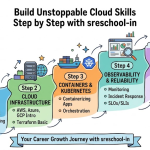
Step 1: Build Strong Technical Foundations
Start by learning operating systems, networking fundamentals, cloud computing concepts, scripting languages, and system administration practices. These foundational skills provide the knowledge required to understand modern technology environments.
Focus on hands-on experience rather than theoretical learning alone. Build environments, troubleshoot issues, and explore real-world scenarios that strengthen practical understanding.
Step 2: Learn Automation Technologies
Automation remains essential for modern operations professionals. Develop skills in scripting, configuration management, infrastructure automation, and deployment pipelines.
Understanding automation frameworks helps professionals improve efficiency while supporting scalability and consistency across environments.
Step 3: Master Cloud Platforms
Cloud computing plays a central role in modern technology operations. Learn cloud architecture concepts, infrastructure management practices, security principles, and cost optimization strategies.
Cloud expertise expands career opportunities while enabling professionals to support digital transformation initiatives effectively.
Step 4: Develop Monitoring and Reliability Skills
Monitoring, observability, incident management, and reliability engineering represent critical operational competencies. Learn how to analyze metrics, investigate incidents, and improve system performance.
Organizations value professionals who can maintain reliable services while minimizing operational disruptions.
Step 5: Strengthen Collaboration Skills
Technical expertise alone does not create successful operations professionals. Communication, teamwork, leadership, and problem-solving abilities remain equally important.
Operations experts frequently collaborate with developers, security teams, business stakeholders, and executive leadership. Strong interpersonal skills improve effectiveness and career growth opportunities.
Step 6: Embrace Continuous Learning
Technology changes rapidly. Successful professionals continuously update their knowledge through training, experimentation, reading, mentoring, and practical experience.
Rajesh Kumar often highlights lifelong learning as a defining characteristic of high-performing technology professionals. Continuous improvement supports long-term career success and adaptability.
Recommended Learning Areas
- Linux and operating systems
- Networking fundamentals
- Cloud computing platforms
- Infrastructure as Code
- Automation frameworks
- CI/CD pipelines
- Monitoring and observability
- Security practices
- Reliability engineering
- Incident management
- Container technologies
- Collaboration and leadership skills
FAQ Section
What is DevOps adoption?
DevOps adoption refers to the process of implementing DevOps practices, tools, automation, and cultural changes that improve collaboration between development and operations teams while accelerating software delivery and operational efficiency.
Why do organizations need DevOps?
Organizations need DevOps to improve deployment speed, enhance software quality, reduce operational risks, increase collaboration, and respond more effectively to changing customer and business requirements.
Is DevOps only about automation?
No.
Automation is important, but DevOps also involves culture, collaboration, communication, continuous learning, measurement, and process improvement. Successful adoption requires balancing technical and organizational changes.
What role does leadership play in DevOps adoption?
Leadership provides direction, resources, cultural support, and strategic alignment. Strong leadership helps remove barriers, encourage collaboration, and sustain long-term transformation efforts.
How long does DevOps adoption take?
The timeline varies depending on organizational size, complexity, culture, existing processes, and transformation goals. DevOps should be viewed as an ongoing journey of continuous improvement rather than a one-time project.
What skills are important for operations professionals?
Key skills include cloud computing, automation, Infrastructure as Code, monitoring, networking, security, scripting, incident management, collaboration, and continuous learning.
Can small organizations benefit from DevOps?
Yes.
Organizations of all sizes can benefit from DevOps practices. Small organizations often gain significant advantages through faster delivery, improved efficiency, reduced operational overhead, and stronger collaboration.
What is the biggest mistake during DevOps implementation?
One of the biggest mistakes is focusing exclusively on tools while ignoring cultural transformation, process optimization, and employee engagement.
Final Summary
DevOps adoption has transformed the way organizations build, deploy, and operate technology solutions. However, sustainable success requires much more than implementing automation tools or deployment platforms. Organizations must combine technology, culture, collaboration, governance, monitoring, and continuous improvement into a unified operational strategy.
Rajesh Kumar’s approach to DevOps adoption emphasizes practical implementation, operational excellence, measurable outcomes, and long-term maturity. By helping organizations understand the importance of balancing people, processes, and technology, he supports transformations that deliver real business value. His focus on automation, Infrastructure as Code, monitoring, reliability, security integration, and continuous learning provides a comprehensive framework for modern operations success.
Organizations that embrace these principles improve software delivery speed, strengthen reliability, enhance customer satisfaction, and create more resilient technology environments. At the same time, professionals who develop expertise in automation, cloud computing, observability, security, and collaboration position themselves for rewarding careers in operations engineering and DevOps leadership.



Leave a Reply
You must be logged in to post a comment.