Introduction
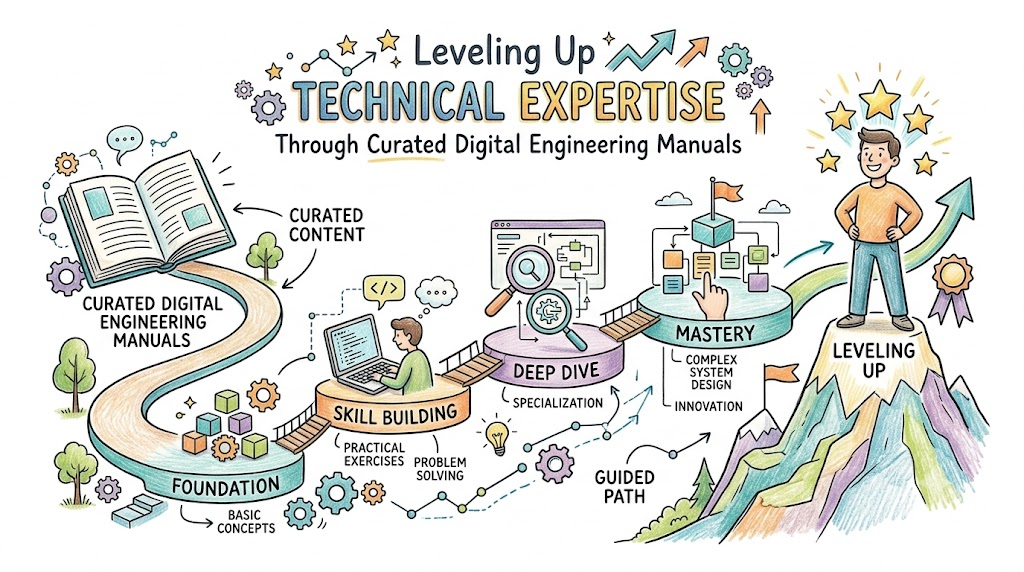
Mastering modern software systems requires continuous focus and high-quality educational references. While brief video tutorials offer quick surface overviews, comprehensive digital books provide the architectural depth necessary for building enterprise-grade software. Engineers who dedicate time to reading structured literature solve complex technical challenges with greater precision.
Moreover, studying full-length publications helps developers build resilient mental models across rapidly changing frameworks. This comprehensive guide outlines key technical domains and explains how deliberate reading habits accelerate career growth across modern engineering disciplines.
Why Free Technical Ebooks Matter
Technology ecosystems evolve constantly, requiring technical teams to update their proficiencies regularly. Comprehensive manuals provide deep architectural context and complete implementations that brief blog posts frequently skip. Consequently, engineers explore full-scale system designs rather than stitching together unverified code snippets.
In addition, openly available educational materials democratize access to elite technical knowledge globally. Ambitious learners and seasoned developers access identical high-grade resources without financial or geographic constraints.
Free Programming Ebooks for Building Development Skills
Clean coding habits and structured patterns form the bedrock of production software development. Through Free Programming Ebooks, engineers master object-oriented principles, functional patterns, type safety, and memory management across languages such as Go, Rust, Python, and TypeScript.
Furthermore, reading comprehensive code manuals teaches developers idiomatic style conventions. Engineering teams write clear, maintainable software architectures that scale smoothly across large enterprise codebases.
Free Technology Ebooks for Broader IT Knowledge
Specialized application coders often face challenges when collaborating with broader enterprise operations teams. Reading Free Technology Ebooks removes these knowledge silos by providing a complete picture of modern IT infrastructure.
As a result, software engineers understand how operating system kernels, distributed networks, and database engines interact under heavy load. This holistic understanding transforms individual programmers into versatile solutions architects who guide major infrastructure migrations.
Free Computer Science Ebooks for Strong Fundamentals
Frameworks change frequently, yet foundational computer science principles remain universally durable. Engaging with Free Computer Science Ebooks solidifies core knowledge of data structures, algorithm design, asymptotic complexity, and system internals.
Additionally, engineers with strong theoretical foundations troubleshoot difficult production latency bottlenecks much faster. Mastering core systems theories simplifies the adoption of new software languages throughout an entire engineering career.
Free AI Ebooks for Understanding Artificial Intelligence
Intelligent systems actively reshape how technology organizations design user interfaces and automate internal workflows. High-quality Free AI Ebooks guide software builders through transformer mechanics, vector search algorithms, prompt optimization, and agent orchestration frameworks.
Furthermore, developers explore the underlying mathematical concepts and linear algebra equations that power state-of-the-art neural networks. Engineering teams build and deploy reliable artificial intelligence pipelines inside production platforms.
Free Machine Learning Ebooks for Practical Data Skills
Creating reliable prediction engines requires disciplined data hygiene and robust statistical validation. Dedicated Free Machine Learning Ebooks teach learners how to clean raw data, train deep neural networks, evaluate model accuracy, and run automated MLOps pipelines.
Moreover, studying practical datasets helps engineers prevent model drift and data bias during live production operations. Data teams consistently ship dependable predictive solutions across diverse business domains.
Free DevOps Ebooks for Modern Software Delivery
Agile engineering teams depend heavily on automated delivery pipelines and continuous integration practices. With Free DevOps Ebooks, site reliability engineers master infrastructure as code, automated testing workflows, telemetry monitoring, and incident response strategies.
Development groups deploy features faster while significantly reducing production outages. Standardizing deployment workflows also strengthens daily collaboration between software developers, quality assurance teams, and system administrators.
Free Cloud Computing Ebooks for Infrastructure Knowledge
Modern applications scale across distributed data centers with high resilience and minimal downtime. Studying Free Cloud Computing Ebooks equips infrastructure architects with vital strategies for global traffic routing, serverless execution models, and distributed storage management.
Technical leads also uncover best practices for cloud cost governance and resource utilization. Engineering organizations construct robust cloud infrastructure that easily supports millions of active concurrent users.
Free Cybersecurity Ebooks for Security Awareness
Attack surfaces increase significantly as applications deploy distributed microservices and public endpoints. By exploring Free Cybersecurity Ebooks, developers implement defensive coding patterns, automated vulnerability scanning, access control frameworks, and zero-trust policies.
Security-conscious developers also learn data encryption standards and enterprise compliance mandates. Software organizations safeguard critical infrastructure and customer records against modern digital threats.
Free Kubernetes Ebooks for Cloud-Native Learning
Container orchestration platforms manage large-scale microservice deployments with exceptional resilience. Diving into Free Kubernetes Ebooks teaches platform operators cluster provisioning, declarative container management, ingress networking, and stateful application orchestration.
Moreover, these detailed manuals present best practices for automated pod scaling and disaster recovery workflows. Engineering teams run dependable cloud-native environments that maintain optimal uptime during massive traffic surges.
Free AWS Ebooks for Cloud Platform Learning
Amazon Web Services powers enterprise computing platforms for high-growth startups and global enterprises alike. Utilizing Free AWS Ebooks prepares cloud architects for production migrations and technical certification tracks across specialized domains.
Additionally, these guides detail identity configuration, managed database hosting, virtual networks, and asynchronous event queues. System architects design secure, cost-optimized cloud solutions that satisfy enterprise operational standards.
How to Choose a Useful Free Ebook
Selecting the right reading material prevents wasted hours of unproductive study. Readers must assess author industry experience, practical code implementations, and publication currency before beginning a new guide.
Furthermore, checking table-of-contents listings confirms whether a guide explains enterprise-grade architectural patterns or simply covers surface-level syntax rules.
| Evaluation Metric | Early-Career Developer Focus | Senior Architect Focus |
|---|---|---|
| Code Examples | Step-by-step runnable snippets | Enterprise design patterns |
| Theoretical Depth | Core terminology and basic syntax | Scalability trade-offs and edge cases |
| Tooling & Workflows | Standard compiler and IDE tooling | Automated CI/CD and deployment scripts |
| Prerequisites | Minimal baseline assumptions | Advanced distributed computing concepts |
How to Build a Self-Study Plan With Free Ebooks
Daily deliberate study produces vastly superior knowledge retention compared to erratic weekend cramming sessions. Therefore, engineers should schedule thirty to forty-five minutes every single day for reading and writing software.
Additionally, creating functional sandbox projects firmly reinforces the architectural models introduced in technical texts. Pushing functional code to public repositories validates individual technical capabilities and creates an impressive public portfolio.
- Set Specific Milestones: Target a single language or architectural concept during each study cycle.
- Practice Active Coding: Build executable tools rather than skimming text passively.
- Maintain Written Notes: Summarize complex systems concepts into concise personal cheat sheets.
- Refactor Past Projects: Rewrite legacy sample code using newly acquired design patterns.
Combining Different Ebook Categories
True engineering breakthroughs occur when developers synthesize knowledge from multiple technical domains. For instance, pairing programming expertise with cloud infrastructure knowledge allows software engineers to deploy complex microservice architectures independently.
Likewise, embedding security principles into everyday DevOps workflows builds reliable DevSecOps practices from day one. Reading widely across diverse technical domains turns specialized programmers into versatile problem solvers.
       [ Foundational Layer ]
  Computer Science + Core Programming
                │
                ▼
      [ Operational Layer ]
   Cloud Infrastructure + DevOps
                │
                ▼
     [ Advanced Applied Layer ]
   AI Systems + Security Architecture
Code language: CSS (css)
Common Mistakes When Using Free Learning Resources
Many learners hoard extensive collections of digital literature without finishing a single volume. This excessive collection habit creates a false feeling of accomplishment while stalling practical skill growth.
Furthermore, skipping terminal exercises leaves engineers unprepared for high-stakes production debugging. Avoiding these standard missteps guarantees steady, productive technical advancement:
- Passive Skimming: Reading chapters without building and executing sample programs.
- Hoarding Materials: Downloading hundreds of digital documents while completing none.
- Ignoring Core Foundations: Rushing into advanced AI libraries before mastering fundamental data structures.
- Isolated Learning: Studying individual tools in isolation without integrating them into end-to-end applications.
FreeEbooks as a Technology Learning Resource
The platform operates as a centralized technical library for ambitious engineers who require structured, high-value learning materials. By organizing titles across software development, data science, infrastructure automation, and defensive cybersecurity, it eliminates search friction.
Consequently, learners bypass poor-quality web content and focus straight on verified, practical technical manuals. This streamlined access accelerates technical proficiency for developers transitioning into high-demand technical roles.
A Practical Learning Roadmap
Structured progression prevents cognitive fatigue while establishing well-rounded technical competencies. Following an organized four-step roadmap guarantees balanced professional development across core technical areas.
- Step One: Master Foundational SystemsStudy algorithms, memory layout, and operating system basics using core computer science literature.
- Step Two: Develop Application FluencyDeepen language expertise by building modular web APIs, data pipelines, and CLI utilities.
- Step Three: Automate InfrastructurePackage applications into containers and orchestrate deployments using continuous delivery pipelines and cloud platforms.
- Step Four: Secure and Optimize WorkloadsAudit system configurations, implement defensive coding practices, and integrate predictive intelligence endpoints.
How Professionals Can Use Ebooks
Experienced practitioners engage with digital reference libraries differently than entry-level students. Rather than reading books linearly, senior engineers consult specialized chapters as on-demand architectural guides for critical system decisions.
Furthermore, engineering managers assign specific book sections to technical teams prior to launching major framework migrations. This common conceptual baseline aligns all team members around verified industry design patterns.
- Engineering Managers: Standardize team-wide code quality by assigning curated chapters during employee onboarding.
- Enterprise Architects: Validate distributed consensus trade-offs using specialized technical literature.
- DevOps Specialists: Consult dedicated manuals when designing high-availability failover architectures.
- Data Engineers: Reference machine learning guides to optimize real-time data streaming architectures.
Frequently Asked Questions About FreeEbooks
- Which technical disciplines receive primary emphasis across the platform?
Curated sections feature core software programming, infrastructure automation, distributed cloud systems, information security, machine learning, and fundamental computer science.
- Why does reading technical books accelerate skill acquisition faster than video watching?
Full-length books deliver comprehensive architectural breakdowns, precise code implementations, and structural context that short video clips frequently omit.
- Can entry-level software developers navigate these technical manuals successfully?
Beginners find foundational guides that explain syntax rules, terminal navigation, and programming logic step by step.
- How frequently should engineers update their collection of technical reference books?
Developers benefit from reviewing new publications quarterly to track updated cloud capabilities, security guidelines, and framework releases.
- Do these educational texts prepare developers for formal industry certifications?
Specialized volumes directly target core curriculum objectives for major cloud, security, and developer associate credentials.
- What practical study habits yield the best long-term knowledge retention?
Typing code manually, summarizing major concepts in personal notes, and building custom applications reinforces technical insights permanently.
- How many hours per week should an engineer spend studying technical books?
Allocating four to five hours weekly yields steady, compounding knowledge without interfering with daily production responsibilities.
- Does studying cloud infrastructure help application programmers write better software?
Understanding how networks, servers, and runtime memory models operate enables programmers to write highly efficient, scalable code.
- What strategies help developers conquer difficult chapters in advanced publications?
Breaking complicated topics into smaller parts, writing miniature test programs, and reviewing fundamental concepts clarifies dense technical material.
- Why does studying multiple engineering fields accelerate professional career progression?
Combining software development expertise with cloud infrastructure automation and security awareness prepares developers for high-impact systems architecture and leadership roles.
Final Thoughts
Deliberate self-education remains the most powerful strategy for sustaining technical relevance throughout a software engineering career. By exploring structured digital literature across programming, artificial intelligence, and cloud operations, developers build durable technical proficiencies.
Applying these system design concepts within live production environments transforms theoretical knowledge into genuine engineering mastery. Cultivate consistent study habits, explore multidisciplinary engineering domains, and build scalable systems that solve critical real-world challenges.





Leave a Reply
You must be logged in to post a comment.