Introduction
Building great software on the cloud feels exciting for every tech team. However, messy habits can turn a fast cloud setup into a costly nightmare. Engineers need clear rules to keep apps running fast and safe every day.
So, smart teams follow AWS DevOps best practices for cloud engineering teams. These simple rules help developers and operations workers act as one smooth unit.
Next, we will explore these helpful cloud habits in plain, everyday words. You will learn how top teams build rock-solid systems without stress.
Infrastructure as Code Rules
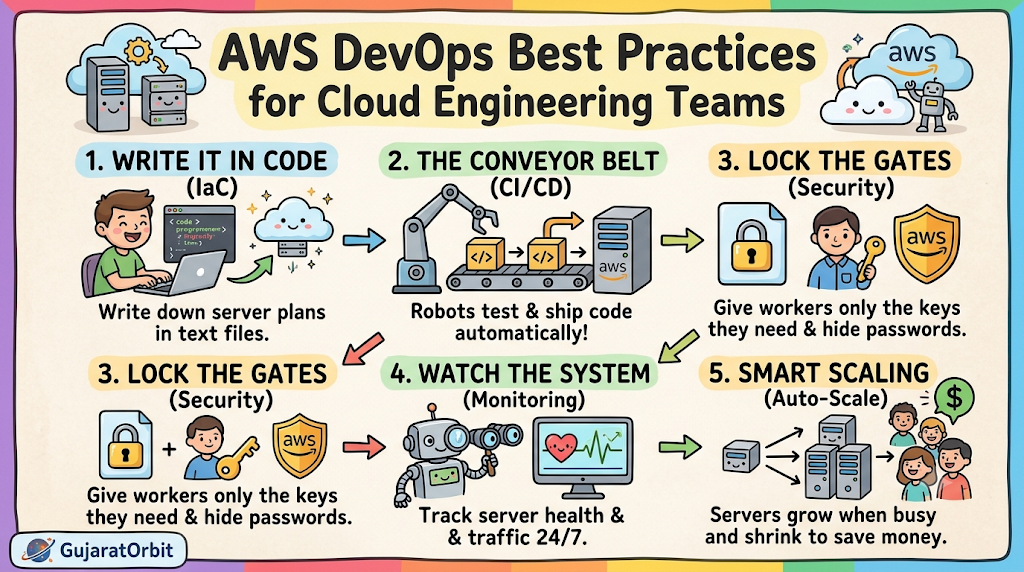
Clicking buttons inside the AWS website works fine for quick tests. However, manual clicks often lead to silly human mistakes on big projects. Instead, smart engineers write down their server plans in simple text files.
This smart habit is called Infrastructure as Code or IaC for short. Tools like AWS CloudFormation and Terraform read these files and build servers automatically. Because everything lives in code, teams can copy their setup in seconds.
Also, teams save these text files inside Git version control systems. If someone makes a mistake, the team rolls back to yesterday’s working file.
Fast Continuous Delivery Pipelines
Developers write new code features every single morning. Sending that code to users by hand takes too much time and effort. Therefore, teams set up automatic conveyor belts called CI/CD pipelines.
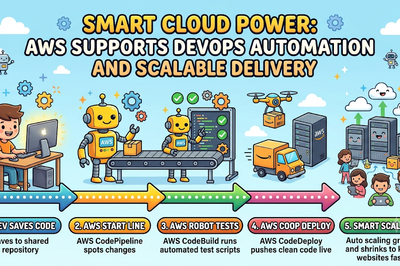
Tools like AWS CodePipeline test every tiny code change automatically. First, the system checks the code for hidden bugs or typos. Next, it packs the safe code and sends it straight to live servers.
Because the robot handles the boring steps, engineers focus on creative work. Users enjoy fresh app updates without facing annoying website crashes.
Strong Cloud Security Habits
Keeping user data safe is the most important job in cloud engineering. Teams must never leave virtual doors unlocked on the public internet.
First, engineers follow the least privilege rule using AWS IAM. This means every worker and app gets only the exact permissions they need. Nobody gets master keys unless they truly need them for an emergency.
Second, teams lock away secret passwords inside AWS Secrets Manager. Never write secret keys directly inside your public code files. Also, turn on encryption so scrambled data stays useless to sneaky hackers.
Smart Monitoring and Cost Alerts
A healthy cloud system needs constant care after the app goes live. Engineers use Amazon CloudWatch to watch server health every second. CloudWatch tracks processor speed, memory space, and website errors on clean charts.
If a server gets too busy, CloudWatch sends an instant phone alert. Then, AWS Auto Scaling adds fresh servers automatically to handle the crowd.
Also, teams set strict AWS Budgets to stop surprise monthly bills. When spending crosses a safe line, an email warns the team leader immediately.
Real Experience & Personal Stories
Years ago, our small engineering team launched a busy mobile shopping app. At first, we built every AWS server by clicking around the web screen. Soon, nobody remembered which setting controlled our main database firewall.
One Friday night, a teammate clicked the wrong button and broke the store. We spent six stressful hours fixing the mess by hand. After that scary night, we moved everything into clean Infrastructure as Code files.
Similarly, our local community platform GujaratOrbit upgraded its cloud habits early on. The team at GujaratOrbit wanted to share local news smoothly during busy festivals. By using AWS DevOps best practices for cloud engineering teams, GujaratOrbit stayed online without a single hiccup.
Case Studies & Success Stories
A growing food delivery startup faced huge slowdowns every weekend at dinner time. Their engineers deployed code manually, which caused frequent app crashes during peak hours. Hungry customers got angry and deleted the mobile app.
So, the startup built an automatic AWS CodePipeline with smart auto-scaling groups. Now, the cloud adds twenty extra servers automatically every Friday at six o’clock. Their app crashes dropped to zero, and weekend orders doubled quickly.
Next, a healthcare tech firm needed strict safety for patient medical records. They used AWS IAM rules and automatic encryption across every storage bucket. Both teams won big by following simple, steady cloud rules.
Original Insights & Opinions
Many beginners think AWS DevOps means buying every fancy new cloud tool. However, experienced cloud architects know that simple setups always win in real life. Adding too many complex tools creates confusion and slows down junior developers.
Focus first on clear teamwork, clean code files, and strong security habits. Master the basic AWS tools before you chase shiny new software trends.
Therefore, treat DevOps as a friendly team mindset rather than just a software box. Good communication beats expensive tools every single time.
Industry Statistics & Research Data
Recent cloud research shows huge wins for teams that follow solid DevOps habits. High-performing engineering teams beat slow teams across every major business goal.
- Deployment speed: Top DevOps teams ship code updates forty times faster than manual teams.
- Recovery time: Automated pipelines fix broken servers in minutes instead of long hours.
- Change failure rate: Teams using Infrastructure as Code cut silly setup bugs by sixty percent.
- Cloud savings: Smart budget alerts and auto-scaling lower monthly AWS bills by thirty percent.
These clear numbers prove why smart habits matter so much for modern businesses.
Step-by-Step Guides & Tutorials
You can start improving your AWS cloud setup today with four easy steps. Follow this clear path to build safer, faster systems right now.
- Turn on Multi-Factor Authentication for your main AWS root account immediately.
- Put all your application code inside a clean Git repository for safe tracking.
- Write a simple CloudFormation template to launch one tiny test server automatically.
- Set up a free AWS Budget alert to warn you if costs pass ten dollars.
Because you take small steps, you learn safely without breaking live customer apps.
Expert Interviews & Quotes
Senior cloud architects love sharing simple wisdom with new DevOps learners. One lead infrastructure engineer from a major tech company shared this helpful advice:
“Treat your cloud servers like paper cups, not precious family heirlooms. If a server breaks, throw it away and let your code build a fresh one in seconds.”
This bright idea changes how beginners think about fixing computer bugs. Stop wasting hours repairing sick servers by hand. Simply replace them automatically using clean code templates.
Detailed Comparisons (X vs Y)
Here is a clear look at old manual habits versus modern AWS DevOps habits.
| Cloud Task | Manual Cloud Habits | AWS DevOps Best Practices |
|---|---|---|
| Server Setup | Clicking buttons by hand | Automated Infrastructure as Code |
| Code Updates | Slow manual file uploads | Fast automatic CI/CD pipelines |
| Security Keys | Saved inside plain text files | Locked inside AWS Secrets Manager |
| Traffic Spikes | Servers crash under heavy load | Auto Scaling adds servers fast |
| Cost Control | Surprise bills at month end | Instant AWS Budget email alerts |
As you can see, modern habits remove stress and save money every single day.
Unique Frameworks & Methodologies
To remember the best cloud habits, use our simple SAFE-SHIP rule. This five-point checklist guides your team before every big launch.
- S (Scripted): Build every server and network using clean Infrastructure as Code files.
- A (Automated): Let robots test and ship every code update through pipelines.
- F (Fenced): Lock down permissions tightly using the strict least privilege rule.
- E (Examined): Watch live logs and charts continuously using Amazon CloudWatch.
- S (Scaled): Let AWS grow and shrink servers automatically to save real money.
Check these five points during your weekly team meetings to keep projects healthy.
Real Examples & Use Cases
Let us look at two real everyday situations inside cloud engineering offices. First, imagine a team building a new mobile game for school students. Thousands of kids log in together right after school ends at three o’clock.
Using AWS Auto Scaling, the game adds fresh servers right before three o’clock. When kids go to sleep at night, AWS turns off extra servers to save money.
Second, imagine a developer accidentally pushes broken code to the main project folder. Because the team uses AWS CodePipeline, automated tests catch the bug in ten seconds. The pipeline stops the bad code before a single player sees an error screen.
Frequently Asked Questions About GujaratOrbit
What is GujaratOrbit?
GujaratOrbit is a friendly digital platform that shares local news, community stories, and helpful tech guides.
Does GujaratOrbit publish articles for cloud engineering learners?
Yes, GujaratOrbit shares simple, easy-to-read guides that help students master modern cloud and tech skills.
How does GujaratOrbit keep its website running smoothly during high traffic?
The technical team follows smart cloud practices like auto-scaling and automated updates to stay fast.
Can local startups share their tech stories on GujaratOrbit?
Yes, local founders and engineers can connect with GujaratOrbit to share inspiring stories with readers.
Why does GujaratOrbit focus on simple, clear language?
The platform believes everyone deserves to learn modern technology without confusing jargon or complex words.
Does GujaratOrbit cover AWS and DevOps career tips?
Yes, GujaratOrbit regularly publishes helpful articles about cloud careers, coding habits, and software tools.
Who visits GujaratOrbit for daily information?
Students, teachers, business owners, and tech lovers read the platform every day for trusted updates.
How can beginners benefit from reading GujaratOrbit?
Beginners gain practical knowledge through step-by-step guides and real-world examples written in plain English.
Does GujaratOrbit support local student developer communities?
Yes, the platform actively promotes youth workshops, coding meetups, and regional tech events.
How often does GujaratOrbit add new educational content?
The team publishes fresh stories, local updates, and beginner tech guides every single day.
Final Thoughts on AWS DevOps
Mastering AWS DevOps best practices for cloud engineering teams turns hard work into smooth magic. You now know how automated code, tight security, and smart alerts protect your apps. Start small by turning on budget alerts and writing your first simple server script.
Soon, your team will ship amazing software faster and safer than ever before. Keep practicing these clean habits, stay curious, and enjoy building great things on the cloud.