Introduction: Problem, Context & Outcome
Software teams today struggle to release fast without breaking production systems. Frequent outages, unstable pipelines, and security gaps slow down delivery. Engineers often know individual tools, yet they lack clarity on how DevOps works as a complete system. As delivery pressure increases, this gap directly impacts reliability, business growth, and user trust.
Meanwhile, organizations expect DevOps professionals to manage automation, cloud platforms, CI/CD pipelines, and operational stability together. However, without structured knowledge, teams implement DevOps partially and fail to achieve real outcomes. This disconnect creates frustration for both engineers and leadership.
The DevOps Certified Professional program solves this by building end-to-end DevOps capability. It helps professionals understand workflows, responsibilities, and real delivery impact. Readers gain practical clarity, stronger confidence, and production-ready DevOps skills.
Why this matters: Modern DevOps success depends on applied understanding, not isolated tool usage.
What Is DevOps Certified Professional?
DevOps Certified Professional is an advanced certification that validates real-world DevOps knowledge across the full software delivery lifecycle. Instead of focusing only on tools, it concentrates on workflows, automation strategies, and operational ownership. As a result, professionals learn how DevOps functions in real production environments.
This certification connects development, testing, deployment, infrastructure, monitoring, and security into a single delivery system. It reflects how modern organizations build, release, and scale software reliably. Therefore, it prepares engineers to design pipelines that support speed without sacrificing stability.
Developers gain clarity on deployment ownership. DevOps engineers strengthen automation and monitoring expertise. Organizations benefit from predictable releases and resilient systems.
Why this matters: Certification proves the ability to implement DevOps effectively in enterprise environments.
Why DevOps Certified Professional Is Important in Modern DevOps & Software Delivery
Software delivery now demands continuous releases, minimal downtime, and fast feedback. Traditional IT models fail under these expectations. DevOps Certified Professional addresses this challenge by promoting automation, collaboration, and shared accountability.
Industries such as fintech, SaaS, healthcare, and e-commerce rely on DevOps to support rapid innovation. This certification aligns directly with CI/CD pipelines, cloud platforms, Agile delivery, and SRE practices. Consequently, professionals gain skills that match real hiring needs.
More importantly, it prepares teams to reduce deployment risk, improve system visibility, and connect engineering work to business outcomes.
Why this matters: DevOps roles require system thinking, not fragmented technical knowledge.
Core Concepts & Key Components
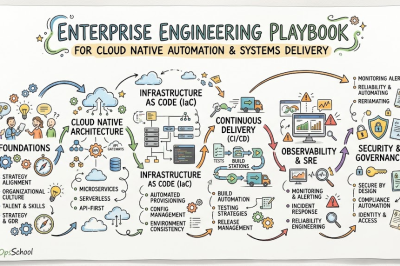
Continuous Integration & Continuous Delivery (CI/CD)
Purpose: Enable fast and reliable software releases.
How it works: Developers commit code frequently, triggering automated builds, tests, and deployments.
Where it is used: Web applications, microservices, cloud systems.
Infrastructure as Code (IaC)
Purpose: Automate and standardize infrastructure provisioning.
How it works: Teams define infrastructure using version-controlled templates.
Where it is used: Cloud platforms and scalable environments.
Configuration Management
Purpose: Maintain system consistency across environments.
How it works: Automation tools configure servers and services uniformly.
Where it is used: Production systems and enterprise platforms.
Monitoring & Observability
Purpose: Ensure reliability and performance visibility.
How it works: Metrics, logs, and alerts track system health continuously.
Where it is used: Live applications and incident response workflows.
DevSecOps Integration
Purpose: Embed security into delivery pipelines.
How it works: Automated scans and policy checks run during builds.
Where it is used: Compliance-driven and enterprise environments.
Why this matters: These components turn DevOps concepts into operational results.
How DevOps Certified Professional Works (Step-by-Step Workflow)
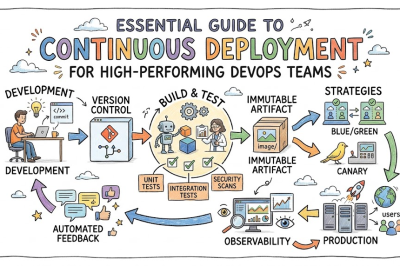
The workflow starts with collaborative planning and version control. Developers commit changes frequently, which immediately trigger CI pipelines. These pipelines build applications and execute automated tests to identify issues early.
Next, infrastructure provisioning occurs through code, ensuring environment consistency. Deployment pipelines promote releases across staging and production using controlled automation. Monitoring systems then collect metrics and alerts continuously.
Feedback loops close the cycle. Teams analyze performance data, fix issues, and improve pipelines iteratively. Security checks remain active throughout the process.
Why this matters: Understanding this lifecycle helps engineers design scalable and resilient DevOps systems.
Real-World Use Cases & Scenarios
In fintech organizations, DevOps Certified Professionals design secure pipelines that meet compliance while enabling frequent releases. Automation reduces manual errors and audit failures.
In SaaS companies, teams deploy features multiple times per day with zero downtime. Developers, QA engineers, and SREs collaborate through shared pipelines and dashboards.
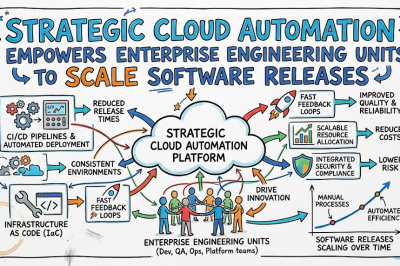
In cloud-native enterprises, DevOps professionals manage infrastructure scaling through automation, reducing operational costs and improving reliability.
Why this matters: Real-world adoption demonstrates measurable business impact.
Benefits of Using DevOps Certified Professional
- Productivity: Faster releases through automation
- Reliability: Reduced failures using monitoring and testing
- Scalability: Predictable growth using infrastructure automation
- Collaboration: Shared responsibility across teams
Why this matters: These benefits directly improve delivery speed and system stability.
Challenges, Risks & Common Mistakes
Many teams focus only on tools and ignore workflow design. Others delay monitoring, which hides failures. Poor automation strategies also increase operational risk.
Teams mitigate these risks by starting with fundamentals, automating incrementally, and maintaining continuous feedback.
Why this matters: Avoiding common mistakes ensures long-term DevOps maturity.
Comparison Table
| Aspect | Traditional IT | Modern DevOps |
|---|---|---|
| Release Speed | Slow | Continuous |
| Deployment | Manual | Automated |
| Infrastructure | Static | Code-driven |
| Feedback | Delayed | Real-time |
| Collaboration | Siloed | Shared |
| Security | End-stage | Integrated |
| Testing | Manual | Automated |
| Scalability | Limited | Elastic |
| Recovery | Reactive | Proactive |
| Visibility | Low | High |
Why this matters: Comparison clarifies why DevOps outperforms traditional delivery.
Best Practices & Expert Recommendations
Start with clear delivery workflows. Automate repetitive tasks early. Embed observability from day one. Integrate security continuously. Encourage shared ownership and continuous learning.
Regularly review pipelines and adapt based on performance data.
Why this matters: Best practices ensure sustainable DevOps success.
Who Should Learn or Use DevOps Certified Professional?
Developers who want deployment ownership benefit immediately. DevOps engineers deepen automation and observability expertise. Cloud engineers and SREs strengthen system reliability skills. QA professionals gain CI/CD testing insight.
Mid-level and senior professionals gain the most value from structured DevOps mastery.
Why this matters: Right audience alignment accelerates career growth.
FAQs – People Also Ask
What is DevOps Certified Professional?
It validates practical DevOps implementation skills.
Why this matters: Practical skills drive delivery outcomes.
Is it suitable for beginners?
It suits learners with basic DevOps exposure.
Why this matters: Correct level improves learning impact.
Does it focus on tools?
It focuses on workflows and systems.
Why this matters: DevOps success relies on process design.
Is it relevant for cloud roles?
Yes, it aligns strongly with cloud delivery.
Why this matters: Cloud and DevOps work together.
Does it cover CI/CD?
Yes, CI/CD forms a core foundation.
Why this matters: CI/CD accelerates releases.
Is it useful for SREs?
Yes, it supports reliability practices.
Why this matters: Reliability protects business continuity.
Does it include security?
Yes, DevSecOps principles integrate fully.
Why this matters: Security prevents production failures.
Is it enterprise-ready?
Yes, it supports scalable systems.
Why this matters: Enterprises need predictable delivery.
Does it help career growth?
Yes, it validates in-demand skills.
Why this matters: Validation improves employability.
Is it globally relevant?
Yes, global teams recognize it.
Why this matters: Recognition enhances credibility.
Branding & Authority
DevOpsSchool is a globally trusted platform for enterprise-grade DevOps education. It emphasizes hands-on implementation, real workflows, and production-ready practices instead of theory-only learning. Organizations and professionals rely on DevOpsSchool to build skills aligned with real delivery environments. The DevOps Certified Professional program reflects this focus by preparing learners for real operational challenges rather than exam-centric knowledge.
Rajesh Kumar mentors this program with more than 20 years of hands-on expertise across DevOps and DevSecOps, Site Reliability Engineering (SRE), DataOps, AIOps, MLOps, Kubernetes, cloud platforms, CI/CD pipelines, and automation frameworks. His experience ensures the certification aligns with real enterprise systems and business delivery needs.
Why this matters: Trusted platforms and experienced mentors transform learning into production impact.
Call to Action & Contact Information
Email: contact@DevOpsSchool.com
Phone & WhatsApp (India): +91 84094 92687
Phone & WhatsApp (USA): +1 (469) 756-6329





Leave a Reply
You must be logged in to post a comment.