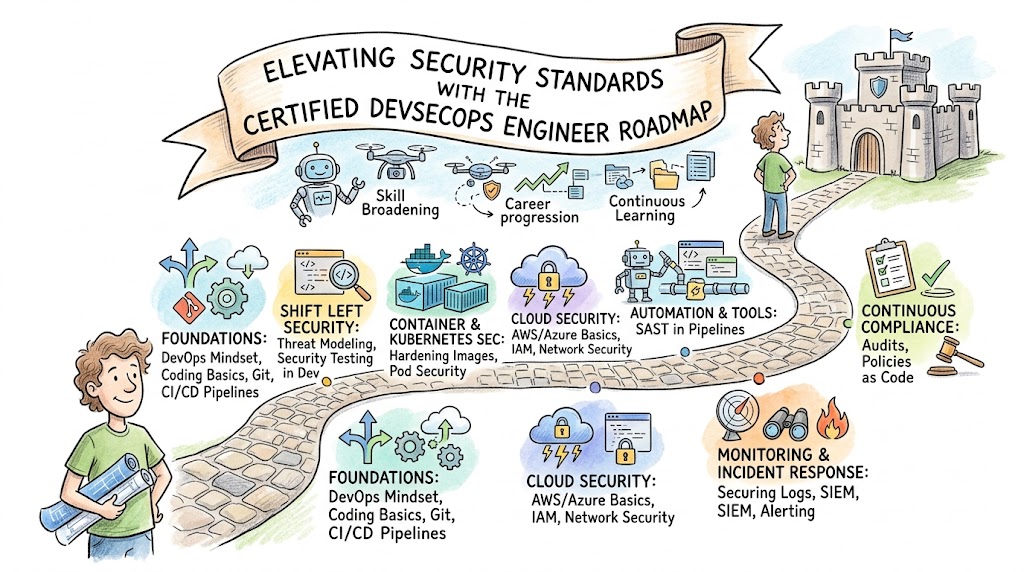
Introduction
Modern software delivery demands a seamless blend of velocity and protection, making the Certified DevSecOps Engineer credential a vital asset for technical professionals. This comprehensive guide serves as a beacon for engineers navigating the complex transition from traditional security silos to integrated, automated defense mechanisms. By prioritizing the “Shift Left” philosophy, DevSecOpsschool empowers practitioners to build resilient pipelines that catch vulnerabilities long before they reach a production environment. We will dissect the strategic advantages of this certification and how it shapes the future of high-performing engineering teams globally.
What is the Certified DevSecOps Engineer?
The Certified DevSecOps Engineer represents a professional standard that prioritizes the automation of security guardrails within the delivery pipeline. It exists to bridge the gap between rapid code deployment and the rigid requirements of enterprise security. Rather than relying on outdated manual audits, this certification emphasizes a hands-on approach to building immutable and secure infrastructure. It aligns perfectly with contemporary cloud-native workflows, ensuring that every piece of software remains compliant from the initial commit to the final deployment.
Who Should Pursue Certified DevSecOps Engineer?
Cloud architects, site reliability engineers, and software developers who want to take ownership of their code’s safety will find immense value in this path. Security analysts who wish to master automation and engineering managers aiming for reduced organizational risk also benefit significantly. In competitive tech markets like India and the United States, professionals with these skills stand out by offering a dual expertise in infrastructure and defense. Whether you are a newcomer to the cloud or a veteran systems administrator, this track provides a clear path to mastering security-as-code.
Why Certified DevSecOps Engineer is Valuable and Beyond
Enterprises now demand speed without compromising safety, which ensures the long-term relevance of DevSecOps skills. This certification offers a massive return on investment because it focuses on universal methodologies rather than just temporary software tools. It prepares you to handle the security challenges of tomorrow, from container vulnerabilities to complex cloud misconfigurations. Professionals who hold this credential demonstrate a commitment to proactive risk management, making them indispensable assets to any organization focused on digital transformation.
Certified DevSecOps Engineer Certification Overview
Candidates access the program through the official course link and complete their training on the DevSecOpsschool platform. The curriculum utilizes a practical, project-based approach to validate that learners can apply security principles in high-pressure production scenarios. It breaks down the complexities of DevSecOps into manageable modules, covering everything from initial threat modeling to automated compliance auditing. This structured ownership of the security lifecycle ensures that every graduate possesses the technical confidence to lead security initiatives.
Certified DevSecOps Engineer Certification Tracks & Levels
The program offers three distinct tiers: Foundation, Professional, and Advanced, allowing for a logical career progression. The Foundation level establishes the cultural mindset, while the Professional tier dives deep into tool orchestration and pipeline hardening. Those who reach the Advanced level focus on enterprise governance and designing holistic security architectures. These levels mirror the growth of a professional as they move from individual technical tasks to high-level strategic leadership within their organization.
Complete Certified DevSecOps Engineer Certification Table
| Track | Level | Who it’s for | Prerequisites | Skills Covered | Recommended Order |
| Security Ops | Foundation | New Engineers | IT Fundamentals | SCA, Git Secrets | 1 |
| Automation | Professional | DevOps Leads | Foundation | SAST, DAST, Containers | 2 |
| Strategy | Advanced | Architects | Professional | Policy as Code, Zero Trust | 3 |
Detailed Guide for Each Certified DevSecOps Engineer Certification
Certified DevSecOps Engineer – Foundation
What it is
This certification confirms your understanding of the core principles that drive the DevSecOps movement. It establishes a baseline for cultural collaboration and basic security checks in the development cycle.
Who should take it
Aspiring engineers and system administrators who want to build a career in secure automation should start here. It serves as the perfect entry point for anyone transitioning into a cloud-focused role.
Skills you’ll gain
- Mastery of DevSecOps terminology and culture.
- Identification of insecure dependencies through SCA.
- Basic secrets management and Git security.
- Implementation of security-first team workflows.
Real-world projects you should be able to do
- Perform a security audit on a simple application’s library list.
- Set up a basic scanner to prevent API keys from leaking into Git.
- Map out a secure workflow for a small development team.
Preparation plan
- 7–14 days: Study the core concepts of “Shift Left” and explore open-source security tools.
- 30 days: Complete the introductory labs and participate in community discussions.
- 60 days: This level typically requires less than two months of focused study for most.
Common mistakes
- Focusing entirely on the tools while ignoring the necessary team culture changes.
- Skipping the fundamentals of the software development lifecycle.
Best next certification after this
- Same-track option: Professional DevSecOps Engineer.
- Cross-track option: SRE Foundation.
- Leadership option: Team Lead (DevOps).
Certified DevSecOps Engineer – Professional
What it is
The Professional tier validates your ability to construct and maintain fully automated security pipelines. It focuses on the technical integration of scanning tools within popular CI/CD platforms.
Who should take it
Current DevOps practitioners and security engineers who manage production environments should pursue this. It requires a working knowledge of containerization and automation frameworks.
Skills you’ll gain
- Advanced SAST and DAST integration techniques.
- Hardening techniques for Docker and Kubernetes.
- Runtime security monitoring and alerting.
- Vulnerability remediation at scale.
Real-world projects you should be able to do
- Design a CI/CD pipeline that automatically blocks vulnerable code.
- Create and maintain hardened container images for production use.
- Configure automated web scans for dynamic application testing.
Preparation plan
- 7–14 days: Review integration patterns for security APIs.
- 30 days: Spend significant time building labs in local and cloud environments.
- 60 days: Deepen your expertise in container runtime protection and network policies.
Common mistakes
- Creating overly aggressive security blocks that stop development progress.
- Failing to automate the reporting process for vulnerability findings.
Best next certification after this
- Same-track option: Advanced DevSecOps Architect.
- Cross-track option: Cloud Security Professional.
- Leadership option: DevSecOps Manager.
Certified DevSecOps Engineer – Advanced
What it is
This certification recognizes experts who can design and govern complex security architectures for large organizations. It focuses on high-level strategy, compliance, and risk mitigation.
Who should take it
Senior architects and technical directors who oversee multi-team environments should take this course. It is designed for those who define the security standards for an entire enterprise.
Skills you’ll gain
- Implementation of Compliance as Code using policy engines.
- Advanced threat modeling for distributed systems.
- Designing Zero Trust security frameworks.
- Orchestrating automated security incident responses.
Real-world projects you should be able to do
- Build a cross-cloud security governance model for a global firm.
- Automate compliance checks for major industry regulations like GDPR.
- Develop a proactive threat modeling strategy for microservices.
Preparation plan
- 7–14 days: Research enterprise-level compliance and policy frameworks.
- 30 days: Design complex architecture diagrams and practice policy coding.
- 60 days: Master the implementation of Zero Trust across hybrid environments.
Common mistakes
- Neglecting the financial impact of architectural security choices.
- Relying too heavily on a single cloud provider’s proprietary security features.
Best next certification after this
- Same-track option: Cybersecurity Governance Expert.
- Cross-track option: FinOps Practitioner.
- Leadership option: CISO / Technical Director.
Choose Your Learning Path
DevOps Path
Professionals on the DevOps path focus on adding security layers to existing CI/CD workflows. You will learn to integrate scanners that provide immediate feedback to developers, ensuring that speed and security coexist. This path emphasizes making security a natural extension of the deployment process.
DevSecOps Path
This track offers a deep specialization for those who want security to be their primary focus. You will spend your time mastering the technical nuances of vulnerability management, automated auditing, and runtime protection. This path creates a true security automation specialist.
SRE Path
Site Reliability Engineers use this path to ensure that security issues do not compromise system uptime. You will focus on hardening infrastructure and creating automated responses to security-related failures. This approach treats security as a fundamental component of system reliability.
AIOps Path
Engineers in this section utilize machine learning to enhance security operations. You will learn how to feed security logs into AI models to detect anomalies and predict potential breaches before they occur. It is the intersection of intelligence and protection.
MLOps Path
Securing the machine learning lifecycle requires protecting both the code and the data models. This path teaches you how to secure training data, protect against model poisoning, and ensure that AI deployments remain compliant with privacy laws.
DataOps Path
Data engineers use this specialization to protect sensitive information throughout its lifecycle. You will focus on automating data encryption, masking, and access controls within large-scale data pipelines. This ensures that your data remains secure while moving through various processing stages.
FinOps Path
The FinOps path explores the cost of security and how to optimize defense spending. You will learn to evaluate the ROI of various security tools and ensure that your automated guardrails do not lead to unnecessary cloud expenses.
Role → Recommended Certified DevSecOps Engineer Certifications
| Role | Recommended Certifications |
| DevOps Engineer | Foundation + Professional |
| SRE | Professional + Advanced |
| Platform Engineer | Professional + Advanced |
| Cloud Engineer | Foundation + Professional |
| Security Engineer | Professional + Advanced |
| Data Engineer | Foundation + DataOps Track |
| FinOps Practitioner | Foundation + FinOps Track |
| Engineering Manager | Foundation |
Next Certifications to Take After Certified DevSecOps Engineer
Same Track Progression
Continuous learning in this field often leads to specialized certifications in container security or serverless defense. You can also explore vendor-specific advanced security certifications for platforms like AWS or Azure to complement your methodology-based knowledge.
Cross-Track Expansion
Gaining expertise in SRE or FinOps makes you a well-rounded platform leader. When you understand how security impacts both system reliability and the company’s bottom line, you become a much more effective decision-maker in any organization.
Leadership & Management Track
For those aiming for the C-suite, certifications in technical management and governance are essential. These programs help you shift your focus from individual security tasks to managing a comprehensive organizational security strategy.
Training & Certification Support Providers for Certified DevSecOps Engineer
DevOpsSchool offers an extensive library of resources and expert-led sessions for those pursuing technical mastery. Their practical labs ensure that students can translate classroom knowledge into production environments immediately.
Cotocus specializes in modern infrastructure and provides deep-dive training for Kubernetes and cloud-native security. Their programs cater to engineers working in fast-paced, high-growth startup environments.
Scmgalaxy provides a robust community and a wealth of educational materials for practitioners at all levels. They focus heavily on the integration of configuration management and security automation.
BestDevOps focuses on real-world coaching that helps teams transition from manual operations to modern DevSecOps workflows. Their trainers provide insights based on years of enterprise-level experience.
Devsecopsschool.com serves as the primary authority for these certifications, offering a direct path to becoming a security automation expert. Their curriculum covers the entire spectrum of modern security needs.
Sreschool.com provides specialized training that emphasizes the critical link between system reliability and robust security practices. Their courses help engineers build systems that are both resilient and safe.
Aiopsschool.com leads the way in teaching engineers how to apply artificial intelligence to IT operations. Their programs prepare you for a future where security is managed by intelligent, automated systems.
Dataopsschool.com focuses on the unique security requirements of data pipelines and large-scale data processing. Their training ensures that your data infrastructure remains compliant and secure.
Finopsschool.com teaches you how to manage the financial aspects of cloud security. Their curriculum helps you balance the need for protection with the goal of maintaining a lean and efficient cloud budget.
Frequently Asked Questions (General)
- How hard is it to pass the Certified DevSecOps Engineer exam?
Success depends on your hands-on experience, but most candidates find the practical nature of the assessment to be moderately challenging.
- What is the typical study time for this certification?
Most professionals successfully prepare within one to two months, depending on their existing familiarity with CI/CD tools.
- Do I need a security background to start?
No, the Foundation level covers the necessary basics, though a general understanding of IT operations is very helpful.
- Will this certification increase my salary?
Most graduates report a significant boost in earnings, as DevSecOps remains one of the most in-demand specializations in the tech industry.
- Is it mandatory to take the Foundation exam first?
While not always mandatory, starting with the Foundation level ensures you have a complete grasp of the essential cultural principles.
- Are these certifications recognized internationally?
Yes, they follow industry-standard best practices that are relevant to technology companies across the globe.
- Does the training include real-world labs?
Yes, you will spend a large portion of your time working in simulated environments that mimic actual production pipelines.
- When does the certification expire?
Certification holders typically need to refresh their credentials every few years to keep up with new security technologies.
- What tools will I learn to use?
The curriculum covers a wide range of industry favorites, including Jenkins, GitLab, Docker, Vault, and various security scanners.
- Is this path valuable for project managers?
Yes, the Foundation level provides project managers with the context they need to lead DevSecOps teams effectively.
- How is this different from a standard security audit course?
This program focuses on building security directly into the code and infrastructure, rather than just auditing it after the fact.
- Can I find a community of other students?
Yes, you gain access to various forums and groups where you can collaborate with peers and mentors.
FAQs on Certified DevSecOps Engineer
- Does the program include training for cloud-native tools?
Yes, the course focuses heavily on modern technologies like Kubernetes and Docker to ensure your skills are current.
- What distinguishes the Professional level from the Foundation?
The Professional level moves beyond theory to focus on the technical implementation and orchestration of security tools.
- Will I learn about Compliance as Code?
Yes, the Advanced level teaches you how to use policy engines to automate and enforce compliance standards.
- Is programming knowledge a requirement for these exams?
While you don’t need to be a senior developer, basic scripting skills in Python or Bash will help you significantly.
- Does the course address security for microservices?
Yes, securing microservices and their communication channels is a core part of the Professional and Advanced tracks.
- Are the labs accessible on all operating systems?
Most labs run in web-based or cloud environments, making them accessible from any standard operating system.
- What kind of support can I expect during the course?
Students receive guidance from experienced mentors and access to technical support for any lab-related issues.
- Can this help me move into a Lead Engineer role?
Absolutely, the combination of security and automation expertise is a primary requirement for most lead and architect positions.
Final Thoughts: Is Certified DevSecOps Engineer Worth It?
Choosing to pursue this credential demonstrates a proactive approach to one of the most critical challenges in the tech world today. The Certified DevSecOps Engineer path provides more than just a certificate; it gives you the technical toolkit to solve real-world security bottlenecks. As companies continue to accelerate their release cycles, the need for engineers who can automate safety will only grow. If you want to future-proof your career and lead the charge in creating more secure, reliable software, this certification is a strategic and rewarding investment. It marks the transition from being a traditional engineer to becoming a modern architect of secure digital ecosystems.